Search Results
Search this site
2925 results found with an empty search
- QuickStick Launches Foodservice Labelling Line | FNBX
Point-of-Sale supplier POS Supply Solutions has rebranded its linerless thermal labels to POS Sticky QuickStick Receipt Labels comments debug Exchange Write a comment Write a comment Share Your Thoughts Be the first to write a comment. The Newsroom Never Miss an Update! Receive personalised weekly email newsletters with industry news curated just for you. Email* Submit or create an account to access more > The procurement of operational consumables in the quick-service restaurant (QSR) and fast-casual sectors is undergoing a shift towards simplified, workflow-centric product naming. POS Supply Solutions, a prominent provider of Point-of-Sale paper and consumables, has announced the rebranding of its POS Sticky Linerless Thermal Label Rolls to POS Sticky QuickStick Receipt Labels. This rebranding strategy represents a calculated effort to bypass technical manufacturing terminology in favour of terms that reflect how kitchen staff interact with products on the line. While material manufacturers and packaging suppliers traditionally categorise these backing-free products as "linerless labels," restaurant managers routinely view and utilise them as sticky thermal receipt rolls. By restructuring its product naming around this real-world foodservice utility, POS Supply Solutions aims to lower the barrier to entry for procurement officers, reducing ordering friction and simplifying inventory management for multi-unit operators. Three-Tiered Adhesive Matrix In high-volume kitchen environments, order accuracy and preparation speed are heavily dependent on reliable ticket adhesion. If a receipt detaches from a beverage cup or a delivery box during transit, the resulting error increases food waste and damages customer loyalty. To assist operators in selecting the correct adhesive for different packaging substrates, POS Supply Solutions has streamlined its QuickStick range into three distinct, surface-matched options: QuickStick Peel Removable Adhesive: Engineered for high-frequency touchpoints such as cold cups, wraps, kraft paper bags, and standard paperboard boxes. The repositionable adhesive enables staff to easily remove and reapply receipts, helping to preserve speed and accuracy during peak rush periods. QuickStick Hold Semi-Removable Adhesive: Formulated specifically for textured, irregular, or low-surface-energy packaging. This includes wax-coated bags, recycled cardboard containers, and ribbed coffee sleeves where standard adhesives frequently fail. QuickStick Seal Permanent Adhesive: Designed to secure heavy delivery packaging and corrugated cardboard pizza boxes. This high-tack formulation ensures that the receipt remains anchored throughout the third-party delivery transport cycle, protecting order data. By categorising adhesives according to packaging type rather than chemical properties, the brand helps operators optimise their labelling systems with minimal technical oversight. Improving Operational Efficiency Alongside the rebranding initiative, the company is expanding its portfolio with the introduction of QuickStick Peel Lite. This product addresses a critical bottleneck in QSR kitchens: the downtime required to change thermal printer paper rolls during high-volume service windows. The Peel Lite product line utilises a thinner thermal paper substrate than the standard QuickStick Peel line, whilst maintaining identical performance under heat-print heads. This reduction in material thickness allows the company to extend the roll length from 263 feet to 370 feet within the same physical roll diameter. For high-volume kitchens, this material thinning delivers several operational advantages: Increased Label Yield: Each roll yields more individual receipts, directly reducing the frequency of roll swaps. Reduced Downtime: Minimising the need to change paper during peak lunch or dinner rushes helps operators protect their speed-of-service benchmarks. Lowered Shipping Costs: Thinner paper reduces the overall weight per carton, lowering freight overheads and improving freight density. Addressing Compliance and Environmental Standards Modern foodservice brands face mounting consumer and regulatory pressure to eliminate harmful chemical compounds from packaging and consumer-facing materials. Thermal receipt papers have historically relied on bisphenols like BPA and BPS as developer agents, which have faced severe scrutiny due to health concerns. The QuickStick product line addresses these compliance demands by utilising a completely non-phenol formulation, manufactured entirely without BPA or BPS. This chemical profile ensures full compliance with strict regional regulations, including California Proposition 65 and Washington State bisphenol restrictions. Furthermore, the linerless design inherently supports corporate environmental, social, and governance (ESG) targets. By eliminating the traditional siliconised paper backing, the product completely removes liner waste from the kitchen waste stream. To support carbon-mitigation initiatives, the entire QuickStick product line is manufactured to be carbon neutral, allowing hospitality brands to meet sustainability targets without sacrificing daily operational reliability. POS Supply Solutions Launches QuickStick Foodservice Labelling Line May 27, 2026 Packaging CuBE Packaging Solutions Invests $30m to Expand US Facility Packaging Anchor Packaging and Pizza Hut Announce Wing Bowl That Keeps Wings Fresh Packaging SupplyCaddy Elevates QSR Packaging with Custom ‘Romero Britto’ Vessel for SOBEWFF Burger Bash Foodservice McDonald's and Crayola Launch Global 'Planet McDonald's' Happy Meal Experience New Solutions Packaging Business & Finance Foodservice Related news
- Tesco Launches RTD Matcha Oat Latte | FNBX
Tesco has launched an own-brand Matcha Oat Latte, signalling a major private-label expansion into the premium plant-based beverage range. comments debug Exchange Write a comment Write a comment Share Your Thoughts Be the first to write a comment. Featured in this news Retail Tesco The Newsroom Never Miss an Update! Receive personalised weekly email newsletters with industry news curated just for you. Email* Submit or create an account to access more > Tesco has launched an own-brand Matcha Oat Latte. This product launch represents a calculated entry into the premium, functional, plant-based hot beverage category, which has traditionally been dominated by specialist coffee shops and expensive health-food brands. Historically, green tea matcha and alternative-milk lattes were viewed as niche products confined to independent cafés or premium health food retailers. By developing a high-quality, scalable own-brand equivalent, Tesco is directly challenging the market share of established brands. This move highlights how the retailer is utilising its vast supply chain and product development resources to make premium, functional beverages accessible to a broader consumer base while capturing lucrative, high-margin sales. Tesco on Instagram Matcha and Plant-Based Formulation The development of the Matcha Oat Latte targets the intersection of three major consumer trends: the rise of alternative dairy, the demand for clean energy, and the growing interest in functional wellness. Oat milk has firmly established itself as the preferred dairy alternative for UK consumers due to its creamy texture, neutral flavour profile, and lower environmental footprint compared to dairy or almond milk. Matcha, a finely ground powder of specially grown and processed green tea leaves, has also seen a surge in popularity. Unlike traditional coffee, which can cause energy spikes and subsequent crashes, matcha contains L-theanine, an amino acid that promotes a sustained, calm focus. By combining these two high-performing ingredients into a single, convenient, own-brand product, Tesco has created an attractive option for health-conscious shoppers. By eliminating the need for consumers to purchase expensive matcha powders and alternative milks separately, the retailer is addressing the demand for cost-effective convenience without sacrificing quality. Pricing and Premiumisation Specialist coffee shops often charge upwards of £4.00 for a freshly prepared matcha oat latte, while premium branded instant sachets command a high price per serving. Tesco’s own-brand alternative offers a competitive price point that democratises access to premium beverages while protecting strong gross margins for the business. This competitive pricing strategy is highly effective in attracting budget-conscious consumers who still wish to indulge in premium health and wellness trends. By positioning the product within its core own-brand portfolio rather than a budget line, Tesco ensures that the drink is perceived as a high-quality, aspirational choice. This strategy of democratic premiumisation allows the retailer to build category value, increase average basket size, and drive customer loyalty in a highly competitive grocery landscape. From an operational and logistical standpoint, the packaging and format of the Matcha Oat Latte are designed to maximise efficiency across the supply chain. By offering the product in an easy-to-ship, long-shelf-life format, Tesco minimises the risks of food waste and high storage costs associated with fresh ingredients. By aligning the product's design with modern logistical requirements, Tesco is well-positioned to support its retail network with stable supply levels, efficient shelf-space utilisation, and strong sales performance. Tesco Adds RTD Matcha Oat Latte to 'Finest' Range May 29, 2026 New Products La Colombe Launches Ready-to-Drink Matcha Latte Line New Products TRUBAR and Cha Cha Matcha Partner to Launch Protein Bar and Café Drinks New Products Little Moons Launches Strawberry Matcha Latte Mochi Ice Cream in UK Ingredients Dawn Foods Introduces Matcha Fond and Upgrades Berry Stabilisers Beverage Retail New Products Coffee & Tea Related news
- AG Barr Chair Mark Allen Steps Down Immediately to Focus on Hilton Food Group Role | FNBX
The departure triggers an immediate leadership transition at the board level, with the company confirming that an independent search for a permanent successor is now underway. comments debug Exchange Write a comment Write a comment Share Your Thoughts Be the first to write a comment. Featured in this news Beverage AG Barr The Newsroom Never Miss an Update! Receive personalised weekly email newsletters with industry news curated just for you. Email* Submit or create an account to access more > AG Barr PLC, the British soft drinks group behind iconic brands such as Irn-Bru, Rubicon, Boost, and Funkin, has announced the immediate resignation of its non-executive chair, Mark Allen OBE . The departure triggers an immediate leadership transition at the board level, with the company confirming that an independent search for a permanent successor is now underway. Reason for Departure: Expanded Role at Hilton Allen’s decision to step down is driven by a significant change in his other professional commitments. He has recently transitioned from non-executive chair to executive chair at Hilton Food Group , a role that requires increased focus and time commitment. Reflecting on his five-year tenure at AG Barr, Allen noted the timing was appropriate given the company's current stability. “The business is in great shape and now is the right time to pass on the baton and focus on my other commitments,” Allen commented. He highlighted the progress made during his leadership, specifically citing brand portfolio innovation, value-accretive mergers and acquisitions, and consistent shareholder returns. Interim Leadership Structure To ensure continuity during the search process, the board has activated its succession contingency: Interim Chair: Susan Barratt , previously the senior independent director, has assumed the role of interim chair. Senior Independent Director: Non-executive director Louise Smalley will step into the senior independent director position for the interim period. Susan Barratt paid tribute to the outgoing chair: “Mark has built and led a high-quality board and advanced the strategic direction for the business. He leaves AG Barr in a strong position, and we wish him all the best for the future.” The operational leadership team—comprising CEO Euan Sutherland, CFO Stuart Lorimer, and Corporate Finance Director Ewan Dytch—remains in place to drive the company’s day-to-day strategy. AG Barr, which has reported growth across its soft drinks and functional beverage segments in recent years, is scheduled to provide a trading update for the year ended 31 January 2026 on 3 February , with final results to follow in March. AG Barr Chair Mark Allen Steps Down Immediately to Focus on Hilton Food Group Role January 21, 2026 People Ball Appoints New Beverage Packaging Presidents for Americas and EMEA People Lofted Spirits Names Nick Smith Master Distiller People Co-op Appoints Alex Dower as Managing Director of Food Retail People Coca-Cola Appoints Rob Gehring President of North America Operating Unit Business & Finance Beverage People Related news
- Grenade Enters US Market with Four High-Protein Bar Flavours | FNBX
UK sports nutrition brand Grenade has launched in the United States, introducing a four-SKU line of 20g protein bars to capture growing US consumer demand. comments debug Exchange Write a comment Write a comment Share Your Thoughts Be the first to write a comment. The Newsroom Never Miss an Update! Receive personalised weekly email newsletters with industry news curated just for you. Email* Submit or create an account to access more > Grenade has officially entered the United States market, introducing its flagship protein bar range to North American retail and digital channels. The initial US commercial rollout features a four-flavour product portfolio, including co-branded OREO variants, formulated to deliver 20 grams of protein and 1 gram of sugar per bar. The market entry marks a key milestone in the company's international expansion strategy following established distribution across Europe, Australia, and Canada. US Market Demand The expansion into North America arrives as protein bars continue to outpace broader category performance, growing at four times the rate of total protein snacks in the United States to become the fastest-growing segment in the US snack sector. Market data cited by the brand indicates that 85 per cent of US consumers are actively seeking to increase their daily protein intake, creating commercial opportunities for functional food manufacturers offering low-sugar, high-protein formulations. Alan Barratt, Co-Founder of Grenade, stated that the brand was developed to combine functional nutrition with indulgent flavour profiles, adding that expanding presence in the US allows the business to deliver its high-protein lineup to new consumer demographics. Product Lineup and Co-Branded Formulations The US market entry debuts with four distinct SKU variations engineered to balance macronutrient parameters with confectionery-style taste profiles. The initial US flavour portfolio includes: 🍪 OREO: A high-protein bar combining cocoa-flavoured dough, cream layers, and real OREO cookie pieces, encased in milk chocolate and containing 20g of protein and 1g of sugar. ⚪ OREO White: A white chocolate-coated line extension combining real OREO cookie inclusions with vanilla cream layers, delivering 20g of protein and 1g of sugar. 🍫 Caramel Salted: A sweet-and-salty protein bar variant featuring layered caramel, crisp crispies, and a milk chocolate coating. 🥜 Peanut Nutter: A nut-forward protein bar formulation combining roasted peanut pieces, caramel, and chocolate. Athlete Partnerships and Footprint To support its US brand launch and drive sports marketing engagement, Grenade has secured endorsement agreements with several professional athletes: Tom Aspinall: UFC Heavyweight Champion representing combat sports channels. Arielle Loewen: Five-time CrossFit Games athlete driving functional fitness visibility. Aimee Cringle: 2026 CrossFit Women's Champion engaging active fitness communities. Cornelious "DIME" Brown IV: Collegiate football quarterback at Alabama A&M University supporting collegiate athletic touchpoints. The US deployment builds upon Grenade's corporate growth following its acquisition by Mondelēz International, providing the enterprise with additional distribution scale, manufacturing infrastructure, and cross-brand licensing capabilities to expand its functional nutrition portfolio across global markets. Grenade Enters US Market with Four High-Protein Bar Flavours August 24, 2026 New Products JiMMYBAR! Launches Creatine and Protein Trail Mix Line New Products UFC and FoodStory Brands Launch Main Event Protein Bars Snacking Popcorn Kitchen Secures British Airways Inflight Listing New Products Frankie's Organic Snacks Launches Halloween Line Snacking Food Confectionery Business & Finance Related news
- PS Seasoning Forecasts 'Protein-First' Diets and 'Newstalgia' to Define the 2026 Flavour Landscape | FNBX Report
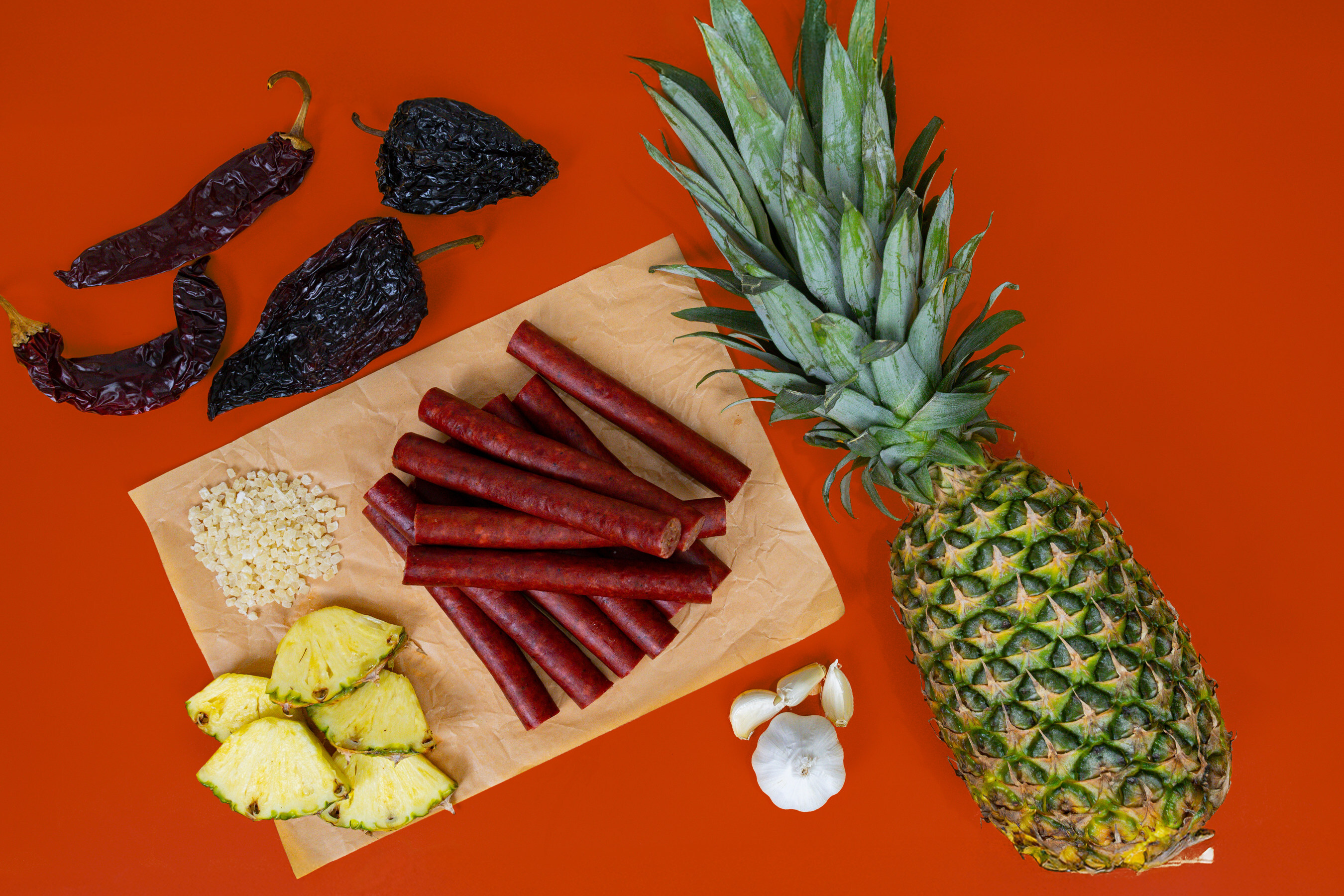
As the food and beverage industry heads into 2026, consumer behaviour is being reshaped by a convergence of tighter household budgets, a relentless focus on high-protein nutrition, and heightened scrutiny of ingredient labels. Report PS Seasoning Forecasts 'Protein-First' Diets and 'Newstalgia' to Define the 2026 Flavour Landscape In its annual forecast released today, PS Seasoning —a global leader in flavour innovation—outlines the key trends expected to dominate the culinary landscape in the year ahead. Drawing on extensive R&D testing involving over 1,200 new flavour concepts developed in 2025, the report identifies how shifts in cooking habits are directly influencing demand for seasonings and sauces. December 31, 2025 Go Related News Never Miss an Update! Receive personalised weekly email newsletters with industry news curated just for you. Email* Submit or create an account to access more > As the food and beverage industry heads into 2026, consumer behaviour is being reshaped by a convergence of tighter household budgets, a relentless focus on high-protein nutrition, and heightened scrutiny of ingredient labels. Yash Burgula , Director of R&D at PS Seasoning, summarised the prevailing consumer sentiment: "Consumers aren't just chasing new flavours—they're looking for solutions that make cooking easier, healthier, and more exciting. The trends we're forecasting reflect what we're seeing in our Culinary Innovation Centre—and what both consumers and manufacturers are seeking as we head into 2026." Here are the six pivotal trends PS Seasoning predicts will shape the market in 2026. 1. The Evolution of 'Protein-First' Eating High-protein diets have graduated from a niche fitness trend to a mainstream dietary fundamental. According to the report, more than 70% of consumers are now actively seeking ways to add protein across all meals and snacks. This shift has birthed the "Protein-First" eating philosophy. Consumers are increasingly selecting their protein source first—whether poultry, beef, pork, wild game, or plant-based options—and building the rest of the meal around it. Crucially, as protein-forward snacks like meat sticks become dietary staples rather than occasional treats, brands are under pressure to prevent flavour fatigue. PS Seasoning notes that bold, unexpected profiles are essential to sustaining this habit. Expect to see everyday snack sticks elevated with globally influenced street-food flavours and complex, layered smoke-and-spice blends that make the format feel craveable and differentiated. 2. The Resurgence of DIY & Home Meat Processing Ongoing economic pressures and rising meat prices are driving a return to frugality and self-sufficiency in the kitchen. With 81% of consumers now cooking more than half their meals at home, there is a renewed interest in bulk buying and home meat processing. This environment is fuelling growth in DIY categories such as homemade snack sticks, sausages, brats, and jerky—practical, value-driven ways to stretch protein budgets. To support this, consumers are gravitating towards easy-to-use kits and multi-purpose blends that simplify the process. Flavour-wise, this DIY movement is moving beyond basic seasonings. The forecast highlights demand for: Sweet-Heat Combinations: A perennial favourite offering complex palatability. Smokehouse Profiles: Wood-fired flavours that mimic professional BBQ. Playful 'Newstalgia': Novelty flavours like root beer. Elevated Classics: Herb-forward blends rooted in traditional curing techniques. 3. The 'Clean Label' Imperative Wellness is now deeply embedded in everyday purchasing decisions, leading shoppers to scrutinise what is in their food as much as how it tastes. Nearly 60% of consumers report reading ingredient labels more closely than they did in previous years. This heightened awareness is driving a mandate for cleaner labels. Shoppers are demanding formulations with lower sugar, fewer preservatives, and zero artificial colours or flavours. Claims such as gluten-free and organic are becoming baseline expectations rather than premium differentiators. Consequently, 2026 will see a surge in seasoning blends that feel "lighter" and more purposeful—delivering robust flavour without unnecessary chemical complexity. 4. Global Exploration via Familiar Formats While consumers crave adventure, they prefer it in accessible formats. The trend of "Global + Familiar" sees exotic flavour cues applied to everyday cooking methods, empowering home cooks to explore new cuisines without mastering complex techniques. PS Seasoning predicts broad appeal for approachable mashups, including: Gochugaru-inspired BBQ: Merging Korean spice with American barbecue traditions. Indian-inspired Curry Seasonings: Adapted for general protein application. Birria-style Flavours: Street-food profiles translated for home kitchens. Global Grilling Blends: International spice rubs designed for the backyard grill. 5. Comfort Meets 'Newstalgia' Nostalgia remains a powerful emotional driver, but the 2026 consumer wants it with a modern edge. "Newstalgic" blends offer the emotional reassurance of comfort food while delivering contemporary flavour appeal. Key profiles in this space include pesto-driven seasonings, buttery umami-rich blends, and imaginative reinterpretations of regional classics that bridge the gap between the past and the present. 6. Swicy & Heat 2.0 The "Swicy" (sweet + spicy) trend remains one of the category's strongest performers, but it is evolving. For 2026, heat will become more sophisticated. Expect to see "Heat 2.0"—layered, visually expressive spice profiles that balance heat with savoury, smoky, and umami elements. The report specifically highlights select chili and fruit pairings designed to appeal to both dedicated heat seekers and more cautious tasters looking for complexity rather than just burn. The Role of AI in Flavour Innovation Beyond specific flavour profiles, PS Seasoning is modernising how these trends are identified. The company is integrating AI-assisted research and flavour ideation tools into its R&D process to accelerate development. "AI doesn't replace the craft of flavour development—it accelerates it," Burgula explained. "We use AI to compress the early stages of innovation—scanning trend signals, researching products, and pressure-testing ideas faster—so our culinary and technical teams can focus on what they do best: turning insight into flavours that perform." About PS Seasoning Family-owned and operated since 1977, PS Seasoning and its sister company Pro Smoker are global leaders in flavour innovation and equipment solutions. producing over 55 million pounds of seasoning annually across a library of 5,000 unique blends. Overview
- London Gatwick Issues Major Food and Beverage Tender | FNBX
London Gatwick has launched a major food and beverage tender spanning six restaurant and pub units generating £65 million in annual sales. comments debug Exchange Write a comment Write a comment Share Your Thoughts Be the first to write a comment. The Newsroom Never Miss an Update! Receive personalised weekly email newsletters with industry news curated just for you. Email* Submit or create an account to access more > London Gatwick Airport has initiated a major food and beverage tender covering six high-volume restaurant and pub units across approximately 3,800 square metres of commercial space in its North and South terminals. Combined, the units currently deliver approximately £65 million (US$88 million) in annual turnover. The concession opportunities encompass spaces currently occupied by leading travel and high-street hospitality brands, including Wetherspoon, PizzaExpress, wagamama, Pret A Manger, and Itsu. The procurement process opens as the airport, operated as a partnership between VINCI Airports and Global Infrastructure Partners, prepares for a substantial increase in passenger throughput following the formal planning approval of its Northern Runway Programme alongside an existing £1.9 billion capital investment scheme. Concession Packages and Units The tender divides the 3,800 square metres of airside hospitality space across five restaurant and pub footprints in the South Terminal and a flagship hospitality site in the North Terminal: South Terminal Casual Dining: Four distinct restaurant spaces spanning footprints of 309 square metres, 320 square metres, 547 square metres, and 790 square metres. South Terminal Pub Unit: A dedicated airside bar and pub footprint covering 647 square metres. North Terminal Landmark Pub: A large-scale bar and casual dining asset encompassing 1,203 square metres. The commercial formats are targeted primarily toward fast-casual operations that combine seated dining capacity with grab-and-go capabilities. Gatwick management highlighted that packaging solutions should accommodate aircraft travel, allowing passengers to take orders on board flights. Commercial Terms and Phased Timelines The procurement schedule sets out a structured bidding and evaluation timeframe leading up to trading commencement in 2028: Submission Deadline: Bids must be submitted by 10 November 2026. Evaluation Phase: Candidate selection and commercial evaluations will proceed into early 2027. Contract Duration: Standard concession contracts will run for seven years, with the larger 1,203-square-metre North Terminal pub unit potentially carrying an extended term to balance capital expenditure requirements linked to airport expansion works. Commercial Structure: Contracts will operate under a concession fee model linked to passenger traffic via a variable minimum guaranteed payment rather than a fixed sum. Trading Handover: Winning operators are scheduled to commence trading operations across the six units from 2028. Stephane Geffroy, Head of Retail at London Gatwick, stated that the airport is seeking commercial partners that align with its passenger-centric terminal investments, noting that the scale of the units requires operators capable of managing high-throughput service and diverse customer needs in a single location. Expansion and Passenger Growth The tender launch aligns with Gatwick's long-term infrastructure expansion following the planning approval of its Northern Runway Programme after an eight-year regulatory process. Combined with Gatwick’s ongoing £1.9 billion capital investment programme, the second runway is projected to increase the airport’s annual passenger capacity from approximately 43 million travellers in 2025 to up to 80 million by the late 2030s. Recent commercial openings across the airport estate have included UK travel-hub debuts for Gail's Bakery and Italian chocolate and gelato operator Venchi. Healthy fast-casual brand Tossed is scheduled to open in the North Terminal in October, while British drinks brand Fever-Tree is set to launch a dedicated bar in the South Terminal. Digital Ordering and Diversity Gatwick is prioritising technological integration and menu flexibility within the tender criteria to accommodate mixed travel parties and streamline terminal circulation. Following terminal refurbishment projects designed to improve passenger flow and sightlines, the airport has implemented communal picnic seating clusters equipped with QR-code ordering, enabling travellers to order from multiple nearby concessions to a single table. The tender framework asks bidders to incorporate flow-management technology and multi-order mechanics to reduce queue times and optimise table capacity during peak flight departure banks. Additionally, prospective partners must demonstrate alignment with Gatwick's Second Decade of Change sustainability roadmap, which commits the airport to achieving net-zero operational emissions by 2030. The tender parameters encourage the inclusion of regional food and drink producers, integrating with the airport's existing programme that features roughly 150 local product references across its retail and dining network. London Gatwick Issues Major Food and Beverage Tender September 16, 2026 Technology Ricoh USA and Hyphen Partner to Scale Restaurant Robotics in US Foodservice Common Table Group Acquires 57 Whitbread Sites in Hospitality Deal Foodservice Sealed Air Launches CRYOVAC ZeroPrep Pouches for Foodservice Dispensing Foodservice Wagamama Unveils 26 Dishes and 15 Drinks in US Menu Overhaul Business & Finance Foodservice Retail Related news
- Sainsbury's and Morrisons Held Talks over UK Supermarket Merger | FNBX
Sainsbury's and Morrisons held preliminary merger discussions earlier this year, highlighting potential consolidation across the UK grocery sector. comments debug Exchange Write a comment Write a comment Share Your Thoughts Be the first to write a comment. The Newsroom Never Miss an Update! Receive personalised weekly email newsletters with industry news curated just for you. Email* Submit or create an account to access more > Sainsbury and rival supermarket Morrisons held preliminary talks regarding a potential multi-billion-pound merger earlier this year, according to reports from Sky News. The exploratory discussions took place between November 2025 and February 2026 before being shelved. While active negotiations have concluded without an agreement, industry sources indicate that neither party has ruled out the possibility of re-evaluating talks in the future, as major grocery retailers assess strategic options in a competitive trading environment. Had a transaction progressed, the tie-up would have represented the most consequential consolidation across the UK grocery market since Sainsbury's abandoned its bid for Asda five years ago. Preliminary Discussions and Ownership Dynamics The high-level discussions brought together Britain's second-largest supermarket chain and its fifth-largest grocery competitor. Morrisons was acquired in 2021 by US private equity firm Clayton, Dubilier & Rice (CD&R) in a debt-funded buyout valued at approximately £7 billion. Since the takeover, the Bradford-based grocer has navigated substantial debt-servicing requirements alongside heavy capital expenditure to protect its store estate and expand its convenience footprint through Morrisons Daily. City sources suggest that CD&R remains receptive to structural opportunities that could unlock liquidity or extract operational synergies through partnerships with established industry peers. Neither Sainsbury's nor CD&R has issued an official statement regarding the talks. Regulatory Scrutiny and Competition Watchdog Precedent Any prospective transaction between Sainsbury's and Morrisons would face rigorous examination by the UK Competition and Markets Authority (CMA). The regulatory climate surrounding major supermarket combinations remains defined by the CMA's 2019 prohibition of Sainsbury's proposed £7.3 billion acquisition of Asda. In that ruling, the competition watchdog blocked the deal on the grounds that combining the two retail networks would substantially lessen competition, lead to higher prices for shoppers, and reduce product choice both nationally and across hundreds of local grocery catchment areas. Analysts note that a combination of Sainsbury's and Morrisons would create a business commanding approximately 23.6% of the UK grocery market. This would position the combined group behind market leader Tesco, which controls around 27.8% of grocery spend, while remaining ahead of discounters and mid-tier competitors. Given the significant overlap between the two grocers' physical estates, legal experts anticipate that any formal merger proposal would require extensive store disposals to secure regulatory clearance. Industrial Capabilities and Sourcing Synergies Beyond retail store counts, the strategic rationale behind past discussions centred on complementary supply chain and manufacturing infrastructure: Vertical Manufacturing Integration : Morrisons operates an extensive internal food-manufacturing division, controlling abattoirs, meat processing facilities, bakeries, and produce packing sites that supply its "Market Street" counters. Logistics and Non-Food Scale : Sainsbury's maintains an established national distribution spine alongside an extensive general merchandise and logistics platform anchored by Argos. Omnichannel Density : Combining store estates would offer greater route density for online grocery delivery and rapid-fulfilment services, helping both brands offset escalating vehicle, fuel, and labour overheads. UK Grocery Retail The disclosure of historical talks reflects the structural margin pressures confronting traditional supermarket operators across the United Kingdom. Sustained market-share expansion by German discounters Aldi and Lidl has compressed trading margins on core grocery staples, prompting conventional grocers to deploy price-matching programmes and loyalty-card pricing schemes such as Nectar Prices and Morrisons More. Concurrently, food retailers have absorbed elevated supply chain input costs, rising business rates, and statutory wage increases. While formal discussions remain paused, retail analysts suggest that ongoing margin challenges and private equity investment horizons could drive further exploration of asset-sharing models, joint buying arrangements, or structural corporate transactions across the UK supermarket sector in the years ahead. Sainsbury's and Morrisons Held Talks over UK Supermarket Merger October 5, 2026 Retail Co-op Merges Franchise and Wholesale Divisions Business & Finance Crosta & Mollica Merges with European Pizza Group to Form €1B Pizza Business Business & Finance Farm Supply Company and Grange Co-op Announce Proposed Merger to Scale Operations Business & Finance Arla Foods and DMK Group Secure Regulatory Approval for Merger Retail Business & Finance Related news
- Little's Coffee Launches Iced Coffee Concentrate Sticks | FNBX
UK coffee brand Little's has launched a new iced coffee concentrate range, flavours Frozen Vanilla, Sweet Cinnamon and Creamy Caramel. comments debug Exchange Write a comment Write a comment Share Your Thoughts Be the first to write a comment. The Newsroom Never Miss an Update! Receive personalised weekly email newsletters with industry news curated just for you. Email* Submit or create an account to access more > Devon-based coffee brand Little's has expanded its product line-up with the launch of a new iced coffee concentrate range, marking its first entry into the highly competitive and rapidly expanding cold coffee category. Designed for premium convenience, the new format allows consumers to prepare café-style iced coffee at home or on the go without the need for specialised machinery. The product range is rolling out to major UK retail shelves, starting with a nationwide listing in Sainsbury’s. Portfolio Expansion into Cold Coffee The launch comes as consumer demand for cold coffee formats continues to rise across the UK. To tap into this shift, the brand has introduced its liquid concentrates in a single-serve stick format. Developed as a direct alternative to ready-to-drink cans and multi-serve bottles, the sticks are designed for portion control and ease of use. Consumers simply tear the sachet, pour the concentrate over milk and ice, and stir to prepare the beverage. The outer packaging, developed by design agency Mad River, features bold, colour-coded pouches designed to stand out on retail shelves and appeal to younger, design-conscious coffee drinkers. Flavour Profiles The iced coffee concentrates contain high-quality coffee and natural flavours, with no added sugars or artificial additives. The range comprises three distinct variants: ❄️ Frozen Vanilla : A classic, sweet vanilla profile. 🍂 Sweet Cinnamon : A spiced, aromatic option with a subtle sweetness. 🍯 Creamy Caramel : A rich, dessert-inspired caramel flavour. Each pouch contains eight individual 13ml sachets (8 x 13ml format). This portioned sizing is intended to provide a convenient, mess-free solution for both home use and on-the-go consumption. Retail and Availability The Frozen Vanilla variant is launching nationwide in Sainsbury’s stores. The brand intends to leverage this initial supermarket listing to establish a firm foothold in the premium convenience coffee sector before expanding wider distribution for the remaining flavours. Little's produces its entire range of instant coffees, capsules, and new concentrates in-house at its manufacturing facility in Devon. The factory holds a BRCGS AA standard certification, ensuring high standards of food safety, quality control, and operational consistency throughout the production process. Little's Coffee Launches Iced Coffee Concentrate Sticks May 29, 2026 Coffee & Tea Lavazza Expands Hong Kong Footprint and Introduces Buffalo Milk Latte Coffee & Tea Happy and Marvel Studios Launch Avengers Doomsday RTD Coffee Line New Products Dunkin' Launches Avengers Doomsday Menu and Collectables Coffee & Tea Purity Coffee Launches Dedicated Whole Bean Espresso Blend New Products Packaging Coffee & Tea Related news
- Nestlé and Starbucks Launch At-Home Refreshers Concentrates | FNBX
Starbucks have expanded their Global Coffee Alliance with the launch of Starbucks Refreshers Concentrates, bringing the $2 billion cold beverages to retail. comments debug Exchange Write a comment Write a comment Share Your Thoughts Be the first to write a comment. Featured in this news Coffee & Tea Starbucks Featured in this news Food Nestlé The Newsroom Never Miss an Update! Receive personalised weekly email newsletters with industry news curated just for you. Email* Submit or create an account to access more > Nestlé and Starbucks have expanded their retail beverage portfolio with the commercial introduction of Starbucks Refreshers Concentrates, transitioning one of the coffeehouse chain's fastest-growing platforms into the at-home packaged goods channel. Developed through the Global Coffee Alliance, the concentrates are formulated to be mixed with water, lemonade, or milk over ice. Powered by green coffee extract, the format delivers a lightly caffeinated, fruit-forward beverage designed to capture expanding consumer demand for midday refreshment, functional energy, and beverage customisation outside traditional coffee hours. The retail launch follows rapid commercial traction across US retail channels, where the product line sold out on Amazon within 24 hours and cleared stock across more than 1,000 Target locations within three days of release. Beverage Platform and Format The retail concentrate launch translates an established foodservice juggernaut into ambient and chilled grocery aisles. Over the past decade, Starbucks Refreshers has grown into an estimated US$2 billion beverage platform, ranking as the second best-selling beverage line across Starbucks coffeehouses globally, trailing only espresso-based beverages. The format has proved especially potent in recruiting younger consumer demographics seeking cold, visually vibrant, and lower-bitterness caffeinated options. Ethel Touitou, Global Category Lead for Starbucks at Nestlé, stated that contemporary consumer behaviour involves navigating diverse beverage occasions across the day to address requirements for energy, refreshment, or indulgence. Touitou explained that the commercial performance of Starbucks Refreshers demonstrated a clear market opening beyond traditional hot coffee rituals, noting that what originated as a seasonal summer product has matured into an all-day refreshment staple. Flavour Portfolio and Formulation Starbucks Refreshers Concentrates enter commercial distribution across three distinct fruit-forward varieties, pairing established coffeehouse recipes with channel-exclusive innovation: 🍓 Strawberry Açaí: A retail translation of the brand's core coffeehouse recipe, pairing sweet strawberry notes with tart açaí and green coffee extract. 🥭 Mango Dragonfruit: A tropical profile combining vibrant dragonfruit notes and ripe mango, formulated for blending with still water or coconut milk. 🍉 Lime Watermelon: A CPG-exclusive variety developed specifically for the retail launch, combining tart citrus lime with refreshing watermelon sweetness. Formulated with real fruit flavours and green coffee extract, the concentrate format allows consumers to calibrate sweetness and dilution ratios directly in the glass, replicating coffeehouse customisation routines at home. Global Coffee Alliance and Retail The introduction of Refreshers Concentrates marks the latest multi-market format deployment under the Global Coffee Alliance, established between Nestlé and Starbucks in 2018. Nik Dhodi, Vice President of the Global Coffee Alliance at Starbucks, stated that the partnership focuses on bringing coffeehouse favourites into domestic consumption through novel CPG architectures. Dhodi noted that initial customer velocity underscores sustained consumer appetite for fruit-based refreshment that accommodates personalised preparation routines. Through the Alliance, Nestlé holds perpetual global rights to market Starbucks consumer packaged goods and foodservice products outside Starbucks company-operated and licensed retail venues. The partnership currently distributes Starbucks-branded coffee and functional beverage products across retail and foodservice channels in nearly 80 international markets, combining Starbucks's brand equity with Nestlé’s industrial processing scale, supply chain networks, and multi-channel retail distribution capabilities. Nestlé and Starbucks Launch At-Home Refreshers Concentrates September 14, 2026 Coffee & Tea Starbucks Debuts Pink Protein Drink and Pecan Sticky Bun Latte Coffee & Tea Caffè Nero Launches Protein Matcha and Latte with Myprotein Coffee & Tea Coca-Cola Reviews Sale of Costa Coffee New Products Starbucks Unveils 2026 Holiday Menu with Tiramisu Velvet Lineup Beverage Coffee & Tea New Products Related news
- Conagra Brands Appoints John Brase as CEO | FNBX
Conagra Brands has appointed industry veteran John Brase as its next President and CEO, effective June 1, 2026. Brase, who brings deep expertise from The J.M. Smucker Co. and Procter & Gamble, succeeds Sean Connolly following a decade-long transformation of the company into a pure-play food leader. comments debug Exchange Write a comment Write a comment Share Your Thoughts Be the first to write a comment. The Newsroom Never Miss an Update! Receive personalised weekly email newsletters with industry news curated just for you. Email* Submit or create an account to access more > Conagra Brands, Inc. has announced that John Brase will serve as the company’s next President and Chief Executive Officer, effective June 1, 2026. Brase will also join the Conagra Board of Directors. He succeeds Sean Connolly, who is stepping down on May 31, 2026, after 11 years of leadership that saw the company pivot to a pure-play, branded food platform. The transition follows a structured succession planning process. To ensure continuity, outgoing CEO Sean Connolly will work closely with Brase throughout the handover period. CPG Scale and Operational Excellence John Brase joins Conagra with over 35 years of experience in the consumer-packaged goods (CPG) sector. His background is characterised by high-level management of multi-billion dollar portfolios and a focus on operational productivity. Key leadership milestones in Brase's career include: The J.M. Smucker Co. : Most recently served as President and Chief Operating Officer, overseeing U.S. retail, international, and Away from Home divisions. His tenure focused on sharpening operational execution and driving growth in core brands. Procter & Gamble (P&G) : Spent approximately 30 years at the global giant, ultimately serving as Senior Vice President and General Manager of the $6 billion North America Family Care business. He was instrumental in the market leadership of iconic brands, including Charmin, Bounty, and Pampers. Richard H. Lenny, Independent Chair of Conagra’s Board, stated that Brase’s track record of leveraging advantaged business systems and driving top-line performance makes him the ideal candidate to lead Conagra’s next chapter. The Connolly Legacy The leadership change marks the end of an era for Sean Connolly, who took the helm in 2015. Under Connolly’s direction, Conagra underwent a total structural overhaul, divesting non-core assets to become a focused, pure-play branded food company. Strategic accomplishments during the Connolly era include: Frozen and Snacks Expansion : Scaling Conagra’s presence in high-growth, high-margin categories. Structural Streamlining : Simplifying the corporate hierarchy to improve agility. Resilience through Volatility : Navigating the company through the global pandemic and subsequent inflationary pressures via a "refuse to lose" operational mindset. As Brase prepares to take control, his primary focus will be on accelerating revenue growth and strengthening margins. He has indicated that his priorities include generating robust cash flow and unlocking the full potential of Conagra’s iconic brand portfolio, which includes Birds Eye, Marie Callender’s, and Slim Jim. Industry analysts expect Brase to apply the "productivity improvement" strategies utilised during his time at Smucker to Conagra’s supply chain and sales functions. His deep experience in "Away from Home" channels may also suggest a renewed focus on expanding Conagra’s footprint within the foodservice and hospitality sectors. The appointment comes as Conagra continues to defend its market share in the frozen and snack aisles against private-label expansion and shifting consumer health preferences. With the transition effective June 1, 2026, the market will be closely watching for any adjustments to the company’s capital allocation strategy or potential M&A activity as Brase applies his P&G-rooted expertise to Conagra’s diverse food categories. Conagra Brands Appoints John Brase as CEO April 13, 2026 People Ball Appoints New Beverage Packaging Presidents for Americas and EMEA People Lofted Spirits Names Nick Smith Master Distiller People Co-op Appoints Alex Dower as Managing Director of Food Retail People Coca-Cola Appoints Rob Gehring President of North America Operating Unit People Business & Finance Food Related news
- Uber Announces Acquisition Offer for Delivery Hero | FNBX
Uber Technologies has launched a voluntary cash takeover offer for Delivery Hero, valuing the global delivery firm at an equity value of 14.8 billion dollars. comments debug Exchange Write a comment Write a comment Share Your Thoughts Be the first to write a comment. The Newsroom Never Miss an Update! Receive personalised weekly email newsletters with industry news curated just for you. Email* Submit or create an account to access more > The global food delivery and quick-commerce sectors are preparing for a major consolidation as Uber Technologies, Inc. has entered into a business combination agreement to acquire Delivery Hero. The voluntary takeover offer of €41.50 per share in cash represents an equity value of $14.8 billion for 100% of the company, or $13.7 billion when adjusted for Uber’s prior stake purchases. Upon regulatory clearance and completion, the transaction will expand Uber’s mobility and delivery footprint to 99 markets globally. Based on 2025 financial performance, the combined entity represents pro forma gross bookings of $236 billion. The management and supervisory boards of Delivery Hero have welcomed the takeover offer and intend to recommend that shareholders tender their shares, subject to a final review of the official offer document. Global technology investor Prosus, which holds approximately a 17% stake in Delivery Hero, has irrevocably committed to tendering its shares, bringing Uber’s total expected economic interest to approximately 53% upon tendering. Transaction Structure and Division of Markets To address geographical overlaps and secure regulatory approvals across multiple jurisdictions, the transaction includes a parallel divestment agreement. Delivery Hero has separately agreed to sell operations in 14 of its current markets to SSW Partners, a New York-based investment firm, for approximately $1.6 billion. Uber will not acquire control over the businesses transferred to SSW Partners. Instead, SSW Partners will operate these units independently while identifying long-term strategic partners. The division of Delivery Hero’s brand portfolio is structured as follows: Operations Acquired by Uber These 50 markets generated $42 billion in gross bookings in 2025 and include the following brands: Baedal Minjok in the Republic of Korea foodora in Hungary foodpanda in Bangladesh, Cambodia, Hong Kong, Laos, Malaysia, Myanmar, Pakistan, the Philippines, and Singapore Glovo in Armenia, Bosnia and Herzegovina, Bulgaria, Côte d'Ivoire, Croatia, Georgia, Italy, Kazakhstan, Kenya, Kyrgyzstan, Montenegro, Morocco, Nigeria, Serbia, Tunisia, Uganda, and Ukraine Hungerstation in Saudi Arabia PedidosYa in Argentina, Bolivia, Costa Rica, El Salvador, Guatemala, Honduras, Nicaragua, Panama, Paraguay, Peru, Uruguay, and Venezuela Middle East talabat in Bahrain, Egypt, Iraq, Jordan, Kuwait, Oman, Qatar, and the United Arab Emirates Operations Acquired by SSW Partners These 14 markets generated $11 billion in gross bookings in 2025 and include the following brands: foodora in Austria, Czechia, Norway, and Sweden efood in Greece Foody in Cyprus Glovo in Moldova, Poland, Portugal, Romania, and Spain PedidosYa in Chile and Ecuador Yemeksepeti in Türkiye Cross-Platform Integration The transaction is designed to accelerate the rollout of Uber's cross-platform strategy, which pairs ride-hailing services with food and grocery delivery. The acquisition will nearly double the number of markets where Uber offers both mobility and delivery from 34 to 58. From an operational standpoint, denser delivery networks typically drive higher order volumes and improved courier utilisation. Historically, multi-product users on Uber's platform generate approximately three times the gross bookings and profits of single-product users, serving as a highly efficient channel for organic customer acquisition. Financially, Uber expects the transaction to be accretive to non-GAAP earnings per share (EPS) immediately upon closing, with accretion projected to reach high-single-digit percentages by the third year of operation. Commitment to German Infrastructure and Workforce As part of the business combination agreement, Uber has made several commitments regarding Delivery Hero's corporate footprint and workforce. Delivery Hero’s global headquarters will remain in Berlin, and Uber has pledged that there will be no workforce reductions at the Berlin office until at least 2029. Furthermore, Uber has committed to investing €2 billion in Germany over the next five years. This capital is earmarked for: The development of its German corporate workforce The expansion of its nationwide delivery and mobility services The deployment of autonomous vehicles in partnership with the German automotive industry Financial Framework and Capital Allocation Uber plans to fund the acquisition using existing cash reserves and new debt. The company has secured a committed bridge financing facility of approximately €14 billion. The transaction is structured to preserve Uber’s investment-grade credit rating, with the company targeting a gross leverage ratio of less than 2x, supported by organic free cash flow. Executives confirmed that Uber's current capital allocation framework remains unchanged, including its ongoing commitment to returning excess capital to shareholders through share buybacks. The takeover offer is subject to a minimum acceptance threshold of 50% plus one share of Delivery Hero's outstanding capital, alongside standard financial and merger control regulatory clearances. Uber has agreed not to enter into a Domination and Profit Transfer Agreement (DPLTA) for at least three years. The transaction is expected to close in the second half of 2027. Uber Announces $14.8B Acquisition Offer for Delivery Hero July 16, 2026 Business & Finance Uber to Acquire Corporate Catering Platform ezCater in $2.3B Deal Technology Deliveroo and Coco Robotics Partner to Roll out Autonomous Robot Deliveries in UK Retail Deliveroo Couriers to Pick and Deliver Aldi Orders in UK Trial Foodservice Domino's Debuts Chinese-Inspired Pizza and Biscoff Collaboration across the UK Business & Finance Foodservice Related news
- People News | Food & Beverage Industry News
Stay updated on food bev executive appointments, leadership moves, industry talent trends, and board-level career developments on FNBX. The Newsroom Never Miss an Update! Receive personalised weekly email newsletters with industry news curated just for you. Email* Submit or create an account to access more > You’re reading a free preview of The Newsroom 📰 ✅ Get full access to The Newsroom — your personalised F&B feed with curated insights, company updates, and announcements. + access to the full app collection from FNBX 👉 Join for Free 👋 Log in First PREV 1 Page 1 NEXT Last People Report 1664 and Robert Pattinson Global Cultural Research Report 1664 and Robert Pattinson Launch Premium Campaign Exploring Cultural Taste Trends. Premium beer brand 1664 has partnered with actor Robert Pattinson and director Brady Corbet to launch a global campaign and research paper titled A Question of Good Taste, exploring the intersection of identity and consumer preference. Read more 1664 and Robert Pattinson Global Cultural Research Report Filter latest news Appointment Celebrity Jobs First PREV 1 Page 1 NEXT Last People Lindt & Sprüngli CEO Adalbert Lechner Steps Down Lindt & Sprüngli CEO Adalbert Lechner steps down as former chief Dieter Weisskopf returns as interim CEO amid regional leadership appointments across Germany and Austria. View More People Ball Appoints New Beverage Packaging Presidents for Americas and EMEA Ball Corporation appoints Carey Causey to lead Beverage Packaging North and Central America, and names Scott Vail president of Beverage Packaging EMEA. View More New Products Caliwater Debuts Dragon Fruit Flavour with Benson Boone Collaboration Caliwater expands its prickly pear cactus water portfolio with Dragon Fruit, debuting the flavour via an experiential activation with Benson Boone in California. View More Soft drinks Justin Timberlake and Jessica Biel Join PRODA Protein Soda as Co-Founders Justin Timberlake and actress Jessica Biel join protein soda brand PRODA as co-founders, supporting creative strategy and retail expansion. View More Foodservice Common Table Group Acquires 57 Whitbread Sites in Hospitality Deal Common Table Group acquires 57 former Beefeater and Brewers Fayre restaurant sites from Whitbread in a deal creating 700 jobs, backed by advisory firm Rove360. View More People Lofted Spirits Names Nick Smith Master Distiller Lofted Spirits names Nick Smith Master Distiller across Bardstown Bourbon Co, Green River, and contract operations as Steve Nally transitions to Emeritus. View More People Co-op Appoints Alex Dower as Managing Director of Food Retail Co-op appoints retail veteran Alex Dower as Managing Director of Co-op Retail, overseeing its 2,300-store convenience estate and £7.25B food business. View More People Corbion CEO Olivier Rigaud to Step Down in 2027 Corbion CEO Olivier Rigaud will step down at the May 2027 AGM after eight years, as the ingredients group initiates a formal succession search and nominates Alexander Wessels to its board. View More Categories Agriculture Alcohol Bakery Beverage Business & Finance Coffee & Tea Confectionery Cultivated Dairy Energy Drinks Events Facilities Flavours & Colours Food Foodservice Fresh Produce Health & Nutrition Ingredients Legal Logistics & Supply Chain Manufacturing Marketing Meat & Seafood New Products New Solutions Packaging Plant-based Retail Safety & Quality Sauces Snacking Soft drinks Sustainability Technology Water Menu Close