



The Co-op has closed all five of its standalone "On The Go" micro-stores following a commercial review of their long-term viability, shifting the food-to-go concept into its primary convenience supermarket estate.
The closures mark the conclusion of a pilot programme launched in July 2025 to test dedicated, high-density food-to-go retail units separate from the group's conventional grocery shops. While the standalone physical locations have ceased trading, the mutual confirmed that the proposition itself remains central to its commercial plans and will be deployed within existing convenience branches.
"Our focus was on the fast launch and learn of the proposition, and following review of their longer-term viability we have taken the decision to close our five stand-alone food-on-the-go locations. These have now closed," a Co-op spokesperson said.
Footprint and Operational Trial Parameters
The trial began in July 2025 with an initial pilot site in Solihull, West Midlands, before expanding across four additional high-footfall locations in England:
Solihull: Station Road, West Midlands
Altrincham: Greater Manchester
Aylesbury: Buckinghamshire
Kingston upon Thames: South West London
Chelmsford: Essex
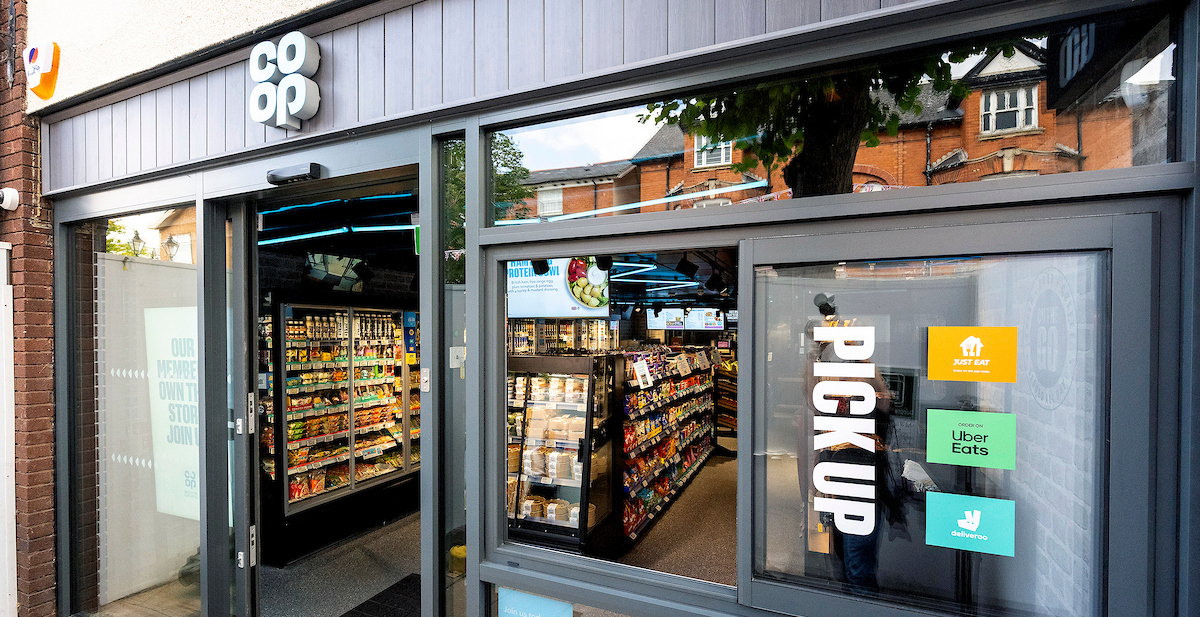
The units operated with compact trading areas ranging from 550 to 850 square feet, significantly smaller than typical Co-op convenience stores, which generally measure between 2,000 and 3,000 square feet.
The range was structured around three daytime meal missions—breakfast, lunch, and evening meals. Product arrays included hot breakfast boxes, premium pastries, Fairtrade bean-to-cup coffee, self-serve soft drinks, a deli counter with custom salads and sandwiches, and artisan pizzas baked to order for evening trade.
Shift to Core Convenience Integration
Rather than operating as standalone commercial units, elements of the On The Go format will now be integrated directly into Co-op's established network of more than 2,300 retail stores.
Internal commercial evaluations showed that food-to-go solutions achieve stronger trading margins and higher inventory turnover when embedded inside a wider convenience basket offer. Operating the concept within traditional grocery doors enables the retailer to capture planned top-up grocery spend alongside high-margin impulse food purchases, spreading shared store labour, refrigeration, and property overheads across multiple trading categories.
The redeployment follows wider capital reallocation across the retailer's food estate. Co-op has continued to invest in store refits, rapid delivery partnerships via Deliveroo, Just Eat, and Uber Eats, and member-pricing initiatives under its core retail operations.

Micro Format Economics and Food to Go Missions
The closure of the standalone sites reflects operational challenges inherent to small-format food-to-go retailing in urban commercial hubs.
While high-density micro-stores generate substantial footfall during peak breakfast and midday lunch rushes, standalone sites carry high fixed property rates and operational costs that must be sustained during slower afternoon and late-evening trading hours.
By integrating dedicated hot food preparation, premium coffee stations, and grab-and-go meal solutions into full-service convenience stores, Co-op aims to meet immediate consumption demand while maintaining balanced sales volumes across all retail trading dayparts.
.png)

.jpeg)
.jpeg)
