


The long-term security of the European food supply chain faces a critical structural risk as the agricultural workforce continues to age. According to data from the European Commission and Eurostat, only 11 per cent of farm managers across Europe are under the age of 40. This demographic decline, paired with rising input costs, climate volatility, and macroeconomic pressures, threatens the viability of small and medium-sized farms.
To address this generational transition, EIT Food, which is supported by the European Institute of Innovation and Technology, and the PepsiCo Foundation have announced the launch of Future Harvest.
The new European training initiative is designed to equip young and next-generation farmers with the skills, tools, and networks required to build resilient, future-ready operations. Operating across France, Spain, the Netherlands, Poland, and Türkiye, the programme aims to reach approximately 900 farmers during its 2026 cohort.
Curriculum Combining Regenerative Farming
For modern agritech and food manufacturing conglomerates, supporting upstream agricultural talent requires a holistic educational framework. Traditional agricultural training often focuses purely on agronomy, leaving young farmers underprepared for the complex financial, technological, and regulatory demands of the modern market.
Funded by the PepsiCo Foundation and implemented by EIT Food in collaboration with local delivery partners, Future Harvest utilises a hybrid learning model that combines online instruction with practical, farm-based experiences. The programme focuses on three core educational pillars:
Regenerative and Climate Resilient Practices: Training participants in soil health restoration, carbon footprint reduction, and water-use efficiency to mitigate the impacts of changing weather patterns.
Digital Tools and Agritech Integration: Introducing modern precision farming hardware, data-driven crop monitoring systems, and software platforms to improve resource utilisation.
Business and Financial Literacy: Building essential skills in corporate strategy, farm business management, entrepreneurship, and leadership to ensure long-term commercial viability.
To bridge the gap between theory and execution, participants will access the Future Harvest FarmHub. This platform connects growers to farm clinics, field visits, peer-to-peer exchange networks, and direct mentoring from industry experts, allowing them to test and apply innovations directly on their own family farms.
Shared European Framework
While the programme operates under a unified, shared European learning architecture, the operational delivery is localised within each participating country. This approach ensures that the curriculum dynamically adapts to the specific soil conditions, regulatory baselines, and crop cycles of each national farming sector.
According to Richard Zaltman, Chief Executive Officer of EIT Food, the future resilience of the European food system relies heavily on whether next-generation operators view agriculture as an attractive sector for innovation and business leadership. By partnering with the PepsiCo Foundation, the initiative provides the resources and networks necessary to help these farmers modernise their operations.
On the corporate side, the partnership highlights how food and beverage multinationals are increasingly investing in Scope 3 supply chain resilience. As Monica Bauer, Senior Vice President of Global Social Impact at PepsiCo and President of the PepsiCo Foundation, noted, the ingredients in PepsiCo's global product portfolio rely directly on the stability of farming families. Supporting local initiatives that build long-term resilience is therefore a business-critical objective.
Programme Timeline and Future Scale
The Future Harvest programme is scheduled to run from June to December 2026. Application windows and eligibility criteria for young and next-generation farmers will be published through EIT Food and local delivery partners in the coming months.
By funding targeted, hands-on education, the collaboration aims to establish a repeatable model for sustainable agricultural transition across Europe. For grocery retailers, brand owners, and policy makers, the success of this programme will serve as a valuable case study in how public-private partnerships can actively safeguard primary food production against ongoing economic and environmental uncertainties.


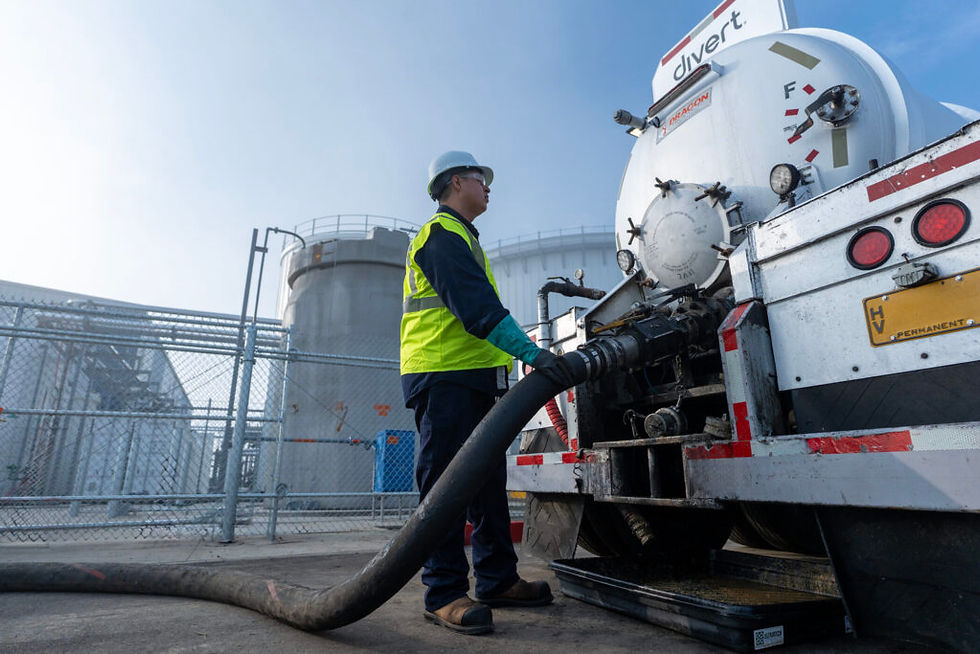
Divert Wins OMRI and CDFA Organic Listings for Upcycled Fertilisers

Cargill Doubles Production Capacity for FR3 Dielectric Fluid in Türkiye

Mars Integrates Shubh Mint Natural Menthol into European Manufacturing
