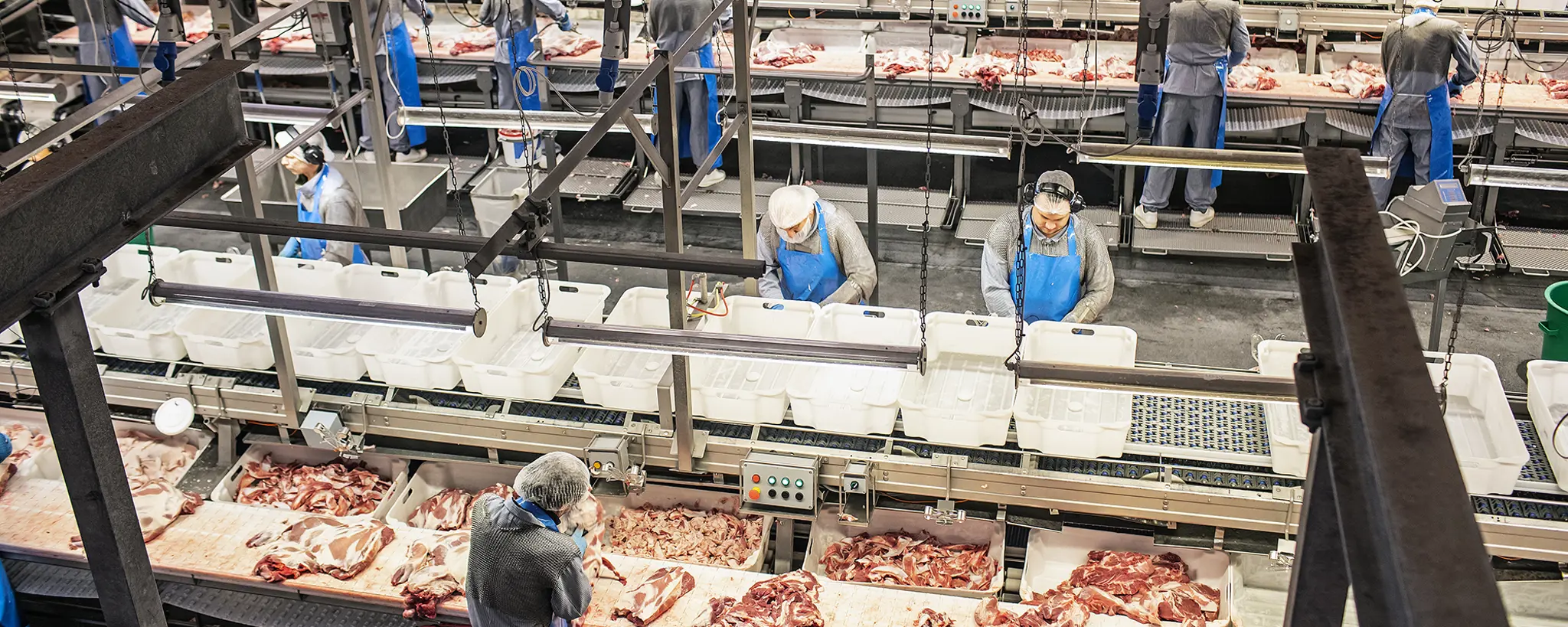
Danish Crown has announced a significant expansion of its domestic production capabilities, confirming plans to establish a specialised deboning facility in Vejen. The move is a direct response to increasing livestock supplies from Danish farmers, necessitating additional processing capacity to handle the surge in volume.
The expansion will see the company hiring additional staff to operate the new site, which is strategically designed to bolster export capabilities to high-demand markets, including Asia.
Operational Capacity and Supply Chain
Set to commence operations around 1 October, the Vejen facility targets a weekly processing capacity of 60,000 pork foreends. The raw material will be supplied from the Group’s existing abattoirs in Horsens, Herning, Rønne, and Blans.
The new production line will be housed in a 14,000-square-metre building complex originally acquired by Danish Crown in April 2023. While the site was pre-designed for food production, it will undergo refurbishment and modernisation to meet specific operational standards.
Jesper Sørensen, SVP Production at Danish Crown Industry, explained the logistical benefits:
"In recent months, we have been utilising the deboning capacity at our Danish slaughterhouses to the fullest, which is why we need to expand. By establishing a specialised production facility in Vejen, we can achieve very high efficiency. At the same time, it will reduce complexity at our abattoirs, allowing them to operate more efficiently as well."
Strategic Rationale: Export Flexibility
The decision to expand within Denmark rather than abroad is driven by a need for market flexibility. The new setup allows Danish Crown to toggle between selling fresh products to European partners and freezing cuts for global export.
Niels Ulrich Duedahl, Group CEO of Danish Crown, commented: "It is fantastic that we are now hiring more employees. This is the result of once again receiving more pigs for slaughter, which creates a need for more hands. We have therefore carefully assessed where and how we could expand our production. By doing so in Denmark, we can sell the products fresh in Europe and as well export them frozen to customers around the world, and it is precisely this flexibility that we have prioritised."
Timeline and Permits
Danish Crown has initiated the permitting process, with regulatory approvals expected to be secured before the end of the first quarter of 2026. Following this, the facility will prepare to launch two-shift operations in October.