Search Results
Search this site
2925 results found with an empty search
- Sea Tales Partners with Jamie Oliver to Drive Sustainable Seafood | FNBX
Sustainable seafood brand Sea Tales has partnered with food activist Jamie Oliver on a multi-year campaign to promote traceable comments debug Exchange Write a comment Write a comment Share Your Thoughts Be the first to write a comment. The Newsroom Never Miss an Update! Receive personalised weekly email newsletters with industry news curated just for you. Email* Submit or create an account to access more > Sustainable seafood company Sea Tales has announced a multi-year partnership with food activist and chef Jamie Oliver to promote responsibly sourced, fully traceable fish. The collaboration, which launched on 8 June 2026 to coincide with World Oceans Day, commences with a digital content series titled "Seafood Revolution". The educational campaign is designed to increase consumer awareness regarding sustainable fishing methods and encourage ethical purchasing habits at the supermarket shelf. The initiative arrives during a critical transition period for the global seafood sector. As regulatory scrutiny over supply chain transparency increases, consumer brand operators are increasingly leveraging high-profile culinary figures to simplify complex sustainability metrics and drive volume sales within the premium canned and chilled seafood aisles. Market Demographics and Supply Chain Pressures The strategic rationale behind the campaign is heavily supported by regional demographic shifts and ecological data. According to metrics published by the United Nations Food and Agriculture Organisation (FAO), more than 90 per cent of global fish stocks are currently classified as fully exploited or overexploited. This pressure on wild marine ecosystems has intensified the demand for third-party verified, sustainable sourcing models that preserve long-term biomass yields. At the same time, purchasing patterns indicate that sourcing transparency has transitioned from a niche consumer preference into a key driver of retail volume growth. Research from Deloitte indicates that two-thirds of Generation Z and Millennial consumers are willing to pay a premium for environmentally sustainable products. By addressing this demographic with clear, traceable sourcing narratives, Sea Tales aims to secure a competitive advantage over conventional, non-certified seafood brands. Sourcing Transparency and Traceable Formats Co-founded by chef and sustainability advocate Bart van Olphen alongside entrepreneur Harm Jan van Dijk, Sea Tales operates a business model structured around direct relationships with artisanal fishing communities and certified processing facilities. The brand's core product portfolio comprises tinned and smoked fish carrying recognised ecological credentials, including Marine Stewardship Council (MSC) and Aquaculture Stewardship Council (ASC) certifications. To demonstrate its commitment to complete traceability, the brand highlights specific artisanal supply chains within its tinned portfolio: 🐟 Fair Trade Skipjack Tuna – Sourced from Bitung, Indonesia, where 110 local fishers across six small boats harvest each fish individually using traditional pole-and-line methods to eliminate bycatch of non-target species. 🪙 Community Reinvestment – For every tinned product sold, the Indonesian fishers receive a Fair Trade premium funded directly by consumer sales to invest in local scholarship funds, healthcare, and environmental cleanup programmes. 🌿 Traceable Tinned Fish – A wider selection of certified, responsibly caught tinned mackerel, sardines, and wild salmon designed to offer retailers a clean-label alternative in the convenience aisle. By utilising highly selective, low-impact fishing techniques, the brand ensures its supply chain remains free from the environmental damage and incidental bycatch associated with industrial purse-seine or longline vessel operations. Retail Distribution and Marketing According to Bart van Olphen, founder of Sea Tales, the partnership with Oliver is designed to resolve consumer confusion at the point of sale. He noted that while modern shoppers express a strong preference for sustainable options, the seafood aisle remains one of the most complex categories to navigate. To support the campaign and drive immediate product trials, the "Seafood Revolution" content is rolling out globally across YouTube, Instagram, and TikTok, utilising practical cooking demonstrations to connect consumers directly with the origins of their food. The digital campaign is structured to support Sea Tales' established international retail footprint. The brand's certified tinned range currently maintains active physical and digital distribution across major North American grocery channels, including Whole Foods Market, Fresh Thyme, Fresh Market, and Walmart. Sea Tales Partners with Jamie Oliver to Drive Sustainable Seafood Demand June 8, 2026 New Products Caliwater Debuts Dragon Fruit Flavour with Benson Boone Collaboration Soft drinks Justin Timberlake and Jessica Biel Join PRODA Protein Soda as Co-Founders Marketing TRIP Launches Global TV and Billboard Campaign with Kendall Jenner and Joe Jonas Alcohol Hall & Woodhouse Partners with James May to Launch The Spanner Cask Ale Business & Finance Meat & Seafood Sustainability People Agriculture Related news
- Xochitl Transitions Snack Portfolio to 100% Avocado Oil | FNBX
Xochitl has transitioned its entire tortilla chip portfolio to 100 percent avocado oil to meet growing consumer demand for premium and better-for-you snack alternatives. comments debug Exchange Write a comment Write a comment Share Your Thoughts Be the first to write a comment. The Newsroom Never Miss an Update! Receive personalised weekly email newsletters with industry news curated just for you. Email* Submit or create an account to access more > Xochitl, a prominent manufacturer in the premium snack sector, has announced a brand-wide transition to 100 percent pure avocado oil across its entire product portfolio. Effective immediately, every variety in the Xochitl lineup, including the established Sea Salt and the newly introduced Spicy Lime and Nacho flavours, will be cooked exclusively in avocado oil. This move positions the brand at the forefront of shifting industry standards as consumer demand for high-quality, "better-for-you" savoury snacks continues to accelerate. Strategic Shift to Premium Cooking Oils The transition away from traditional vegetable or seed oils represents a significant investment in ingredient quality. Avocado oil is increasingly favoured in the food manufacturing sector due to its high smoke point, which preserves the structural integrity and flavour profile of corn-based products without leaving a greasy residue. From a nutritional standpoint, the shift aligns with the rising popularity of heart-healthy fats. By utilising avocado oil, Xochitl is catering to health-conscious demographics while maintaining the thin, crispy texture that defines its market presence. This strategic pivot reflects a broader movement within the snack industry toward cleaner labels and functional ingredients. Portfolio Expansion and Flavour Innovation In conjunction with the oil transition, Xochitl is expanding its flavour offerings to capture a wider segment of the market. The brand has introduced two new varieties designed to offer authentic Mexican flavour profiles: Spicy Lime : A blend of citrus and chilli heat. Nacho : A modern interpretation of traditional cheesy snacks applied to the brand's signature light-crunch base. These additions join the existing Cholula Hot Sauce flavour, indicating a focused effort to provide bold, diverse options that differentiate the brand from standard commodity tortilla chips. Visual Identity and Shelf Presence Updates To communicate this ingredient shift to the retail market, Xochitl has updated its signature craft paper packaging. The new bags feature a "Made with Avocado Oil" illustration and utilise bold colour-blocking techniques to improve shelf visibility and product differentiation. The colour palette has been redesigned to reflect specific flavour profiles: Sea Salt now features a deep cerulean blue, while Nacho and Spicy Lime utilise golden yellow and vibrant green-yellow hues, respectively. These visual updates are intended to signal the brand's evolution and premium positioning to both retailers and consumers. Industry Impact and Corporate Commitment The move to avocado oil is described by Xochitl leadership as a major investment in quality and brand authenticity. Maura Mottolese, CEO of Xochitl, stated that the transition is aimed at enhancing the overall snacking experience and meeting the expectations of a community that demands high-standard ingredients. For industry stakeholders, this portfolio-wide change serves as a case study in how established snack brands can adapt to the "better-for-you" movement through significant supply chain and production adjustments. By committing to a 100 percent avocado oil standard, Xochitl is setting a new benchmark for premium tortilla chips in the competitive snack aisle. Xochitl Transitions Snack Portfolio to 100% Avocado Oil March 3, 2026 New Products Frankie's Organic Snacks Launches Snickerdoodle Avocado Oil Puffcorn New Products Lay's Debuts Holi-LAY'S Range with Chocolate Chips New Products JiMMYBAR! Launches Creatine and Protein Trail Mix Line Snacking Pringles Launches Halloween Campaign with Custom Can-Shaped Urn Ingredients Food Related news
- Suntory Invests £14.5M in UK Blackcurrant Facility | FNBX
Suntory Beverage and Food GBI has announced a 14.5 million pound investment in a Herefordshire blackcurrant processing facility comments debug Exchange Write a comment Write a comment Share Your Thoughts Be the first to write a comment. Featured in this news Soft drinks Suntory The Newsroom Never Miss an Update! Receive personalised weekly email newsletters with industry news curated just for you. Email* Submit or create an account to access more > Suntory Beverage and Food GBI (SBF GB&I) has announced a 14.5 million pound investment in a blackcurrant processing facility located in Ledbury, Herefordshire. In partnership with Bevisol Ltd, a division of the Döhler Group, the site aims to modernise fruit preparation and improve processing efficiency for the company's Ribena brand. The facility is scheduled to be operational in time for the upcoming blackcurrant harvest. By situating the plant closer to the heart of the growing regions and the main SBF GB&I factory, the company intends to streamline its logistics and fruit preparation processes. The Future of British Farming The investment introduces several technologies designed to improve efficiency, traceability, and operational performance throughout the blackcurrant processing cycle: Advanced evaporators: Powered by vapour recompression technology to support high-capacity processing. Cleanable membrane filtration: Replaces conventional filtration methods to improve operational efficiency. Automated handling systems: Includes automated weighing, tipping, and handling systems to enhance consistency across the operation. Digital tracking: Implementation of digital smart tag tracking on fruit bins to improve visibility throughout the supply chain. Karl Ottomar, Supply Chain Director at SBF GB&I, noted that the facility represents a milestone for the company’s supply chain, allowing for continued collaboration with long-standing British growers. Supporting Growers and Rural Communities SBF GB&I sources blackcurrants from 33 farms across five UK regions, representing approximately 10,500 tonnes of fruit harvested annually over a six-week summer period. The new facility is expected to create 12 new full-time roles and an additional 30 seasonal positions in the region. This development forms part of a wider 57.5 million pound programme of investment by Suntory Beverage and Food across its UK supply chain. Other projects include manufacturing capacity improvements and emission reduction initiatives at the company’s Coleford factory, including plans to upgrade electricity connections and install a new manufacturing line in 2027. Suntory Beverage and Food GBI Invests £14.5M in UK Blackcurrant Facility June 24, 2026 Retail Sainsbury's and Morrisons Held Talks over UK Supermarket Merger Alcohol UK Introduce Digital Age Verification for Alcohol Sales Facilities Haribo Opens New £35M Warehouse West Yorkshire Facility Business & Finance Mars Scales UK Manufacturing with £190 Million Slough Investment Business & Finance Facilities Fresh Produce Agriculture Manufacturing Related news
- Birrificio Angelo Poretti Alcohol Free Launches in UK | FNBX
Carlsberg Britvic has launched Birrificio Angelo Poretti Alcohol Free at Waitrose, targeting the premium world lager and moderation trends. comments debug Exchange Write a comment Write a comment Share Your Thoughts Be the first to write a comment. The Newsroom Never Miss an Update! Receive personalised weekly email newsletters with industry news curated just for you. Email* Submit or create an account to access more > Carlsberg Britvic has announced the launch of Birrificio Angelo Poretti Alcohol Free, a 0.5% alcohol by volume (ABV) iteration of its rapidly growing Italian lager brand. Brewed at the historic Valganna brewery in northern Italy, the product is positioned to capture a highly lucrative intersection within the UK beverage market: the premium world lager segment and the rapidly expanding non-alcoholic space. By introducing a zero-alcohol variant of the fastest-growing world lager in its portfolio, the joint venture aims to expand drinking occasions, secure premium off-trade shelf space, and capture consumer spending as moderation trends continue to redefine British drinking habits. The decision to introduce Birrificio Angelo Poretti Alcohol Free reflects a structural evolution in consumer purchasing patterns. No-and-low alcohol beverages are no longer viewed by the industry as niche alternatives or temporary dietary substitutes. Instead, they represent a mature, permanent category driven by the rising demographic of temperate consumers who regularly alternate between alcoholic and non-alcoholic drinks during a single occasion. By launching a 0.5% ABV option, Carlsberg Britvic is targeting the premium world lager segment, which has historically shown resilience against broader volume declines in the beer industry. Traditional standard lagers have faced intense margin pressure from rising input costs and shifting youth demographics. Conversely, premium world lagers have maintained strong brand equity, allowing brewers to pass on cost increases to consumers who associate continental heritage with higher quality. Integrating an alcohol-free product into this premium bracket allows the brand to bypass the discount-heavy associations of traditional soft drinks and standard non-alcoholic beers. It positions Poretti Alcohol Free as an aspirational, adult table beverage that can command a higher unit price, thereby protecting retail margins. Retail and Alignment with Waitrose To establish immediate premium credentials, Carlsberg Britvic has aligned with high-end supermarket chain Waitrose for the initial exclusive launch of the 4 x 330ml bottle multipack at a recommended retail price (RRP) of £5.00. This exclusive window, running ahead of a wider nationwide grocery and convenience rollout in August, represents a calculated demographic targeting strategy. Waitrose shoppers traditionally index highly for premium grocery spend, organic food products, and early adoption of health and wellness trends. Introducing the product within this high-value retail environment allows Carlsberg Britvic to test consumer response, build brand familiarity, and secure early rate-of-sale data to support the wider off-trade integration later in the year. Furthermore, the £5.00 price point for the 4-pack positions the brand firmly within the premium tier of the non-alcoholic aisle. This price structure supports retailer profitability by matching the transactional value of alcoholic premium lagers, ensuring that the shelf-space allocation does not lead to a dilution of category value. Low Alcohol Brewing One of the primary challenges in the non-alcoholic beer sector is maintaining the sensory and textural characteristics of standard-strength lager. Ethanol acts as a crucial carrier of flavour compounds and contributes significantly to the mouthfeel, body, and overall drinking experience of a beer. Traditional dealcoholisation methods, such as vacuum distillation or thermal evaporation, can strip away delicate hop volatiles and leave the final product tasting overly sweet, worty, or thin. To address this, the brewers at the Valganna facility have adapted Poretti’s classic brewing methodology to ensure that the 0.5% ABV variant closely replicates the profile of the core 4.8% ABV lager. Poretti is traditionally characterised by its complex hop bill, which provides a structured bitterness and a clean, aromatic finish. By using targeted cold-contact fermentation and precise temperature-controlled brewing, the production team has successfully managed sugar conversion while preserving the ester and hop-derived aroma profiles. This technical execution was validated prior to the UK launch, with the liquid earning the Italian Product of the Year award in 2025. This accolade provides Carlsberg Britvic with strong business-to-business marketing leverage when pitching the brand to category buyers who prioritise taste and quality reassurance. For Carlsberg Britvic, the expansion of the Poretti brand is an important component of a broader portfolio premiumisation strategy. By offering an alcohol-free alternative under a highly visible, authentic Italian brand, the company is enabling retailers to build comprehensive, multi-tiered world lager ranges. The launch will be supported by a national marketing campaign and experiential sampling programmes across the summer. This marketing investment is designed to generate consumer trial and establish the brand as a natural accompaniment to premium dining and outdoor socialising. Carlsberg Britvic Launches Birrificio Angelo Poretti Alcohol Free in UK May 27, 2026 Beverage BERO Brings Back Spider-Man Branded Beer Cans New Products Goodrays with Brewgooder to Launch Functional Alcohol-Free Beers New Products Asda Launches Asquith 1965 Craft Beer Range in Partnership with Independent Breweries New Products Athletic Brewing and Graza Partner on Non-Alcoholic Pilsner Brewed with Olive Oil Beverage Alcohol New Products Related news
- ADM Engages 56,000 Farmers across 4.6M Acres in Regenerative Agriculture Report | FNBX Report
ADM has published its fourth annual regenerative agriculture report, showing that its 2025 programmes engaged more than 56,000 farmers across 4.6 million acres and cut 946,000 tonnes of CO₂e. ADM also expanded collaboration across the value chain through new partnerships, including initiatives with PepsiCo, Mars, General Mills and Walmart. Report ADM Engages 56,000 Farmers across 4.6M Acres in Regenerative Agriculture Report ADM has published its fourth annual regenerative agriculture report, showing that its 2025 programmes engaged more than 56,000 farmers across 4.6 million acres and cut 946,000 tonnes of CO₂e. ADM also expanded collaboration across the value chain through new partnerships, including initiatives with PepsiCo, Mars, General Mills and Walmart. September 16, 2026 Go Related News Never Miss an Update! Receive personalised weekly email newsletters with industry news curated just for you. Email* Submit or create an account to access more > ADM has published its fourth annual regenerative agriculture report, detailing the expansion of its global grower network and environmental outcomes achieved during the 2025 calendar year. According to the report, ADM's regenerative agriculture initiatives engaged more than 56,000 farmers across approximately 4.6 million acres globally. Operating across 11 countries and covering 10 distinct commercial crops, the programmes generated an estimated 946,000 metric tonnes of carbon dioxide equivalent (CO2e) reductions when measured against regional baseline benchmarks. The annual audit underscores the operational scaling of low-carbon agricultural supply chains, highlighting how primary processors and consumer packaged goods (CPG) multinationals are aligning farm-level technical assistance and financial incentives to support verified Scope 3 emissions reductions. Global Acreage and Emissions Reductions ADM's regenerative farming model focuses on soil health restoration, input efficiency, and emissions abatement across primary grain, oilseed, and row-crop supply basins. 🌱 Farmer Participation: Engaged more than 56,000 participating growers globally across 11 producing countries. 🚜 Acreage Coverage: Enrolled approximately 4.6 million acres across North America, Latin America, Europe, and the Asia Pacific region. 🌾 Commodity Breadth: Applied regenerative practices across 10 commercial crop varieties within global sourcing networks. 📉 Emissions Abatement: Delivered approximately 946,000 metric tonnes of CO2e reductions relative to regional agricultural benchmarks. Greg Morris, Senior Vice President and President of Ag Services and Oilseeds at ADM, stated that resilience originates at the farm level, noting that improving and protecting soil health equips growers to navigate changing climate conditions and maintain productive yields. Morris added that farm-level resilience strengthens downstream value chains, supporting the stability of the global food architecture while positioning ADM to link agricultural origination with lower-carbon markets at commercial scale. Value Chain Partnerships with Food and Retail To scale regenerative practices and finance farm-level transitions, ADM has expanded direct co-investments and commercial agreements with downstream food, beverage, and retail enterprises. The enterprise accelerated joint value-chain programmes with major commercial partners: Snack and Confectionery Collaborations: Targeted supply chain initiatives executed alongside PepsiCo and Mars to transition raw agricultural ingredients to verified low-carbon practices. Food Processing and Mass Retail Alliances: Expanded multi-party programmes linking upstream growers with General Mills and mass merchant Walmart to drive regenerative sourcing into mainstream grocery aisles. These commercial structures connect growers directly with technical advisory services, agronomic data management tools, and financial incentives funded by downstream commercial brand owners seeking verified carbon reporting. Scope and Regional Programme Framework The comprehensive report establishes ADM’s baseline definitions, core principles, and agronomic practices across participating operating corridors, integrating feedback from grower surveys and consumer market research. Geographic Expansion: Multi-region deployment detailing ongoing farm programmes across North America, Latin America, Europe, and Asia Pacific. Technical and Financial Connectivity: Providing participating farmers with third-party technical advisory services, outcome-based payments, and direct market access for low-carbon crops. Outcome Verification: Leveraging farm-level data tracking to evaluate biodiversity, soil health improvements, and greenhouse gas metrics against verified agricultural benchmarks. Published annually since 2023, the report is intended to provide transparent verification of ADM's regenerative farming footprint and customer-backed sustainability alliances. Morris highlighted that for agricultural progress to endure, regenerative frameworks must prove viable on the farm while generating durable market demand across commercial food and beverage processing sectors. Overview
- Saputo Agrees £988M Sale of UK Dairy Division to Lactalis | FNBX
Saputo has entered into a definitive agreement to sell its UK dairy division to Lactalis in a deal valued at an enterprise value of approximately £988 million. comments debug Exchange Write a comment Write a comment Share Your Thoughts Be the first to write a comment. Featured in this news Dairy Saputo The Newsroom Never Miss an Update! Receive personalised weekly email newsletters with industry news curated just for you. Email* Submit or create an account to access more > Saputo Inc. has agreed to sell its Dairy Division (UK) to French dairy enterprise B.S.A. SAS (Lactalis) for an enterprise value of approximately £988 million ($1.34 billion). The transaction encompasses Saputo's entire British manufacturing footprint, proprietary brand portfolio, and regional workforce. The deal is expected to close by the end of the first quarter of calendar 2027, subject to customary closing conditions and required regulatory approvals. Transaction Overview and Brand Portfolio The sale includes five UK manufacturing facilities alongside a portfolio of established British cheese, butter, and spread brands. Key assets transferred to Lactalis under the agreement include: 🧀 Cheese Portfolio: Market-leading brands Cathedral City and Davidstow cheddar, alongside the Wensleydale Creamery portfolio. 🧈 Butter and Spreads: Key domestic household brands including Country Life butter, Clover, and Utterly Butterly. 🏭 Manufacturing Infrastructure: Production facilities located in Hawes (North Yorkshire), Davidstow (Cornwall), Nuneaton (Warwickshire), Kirkby (Merseyside), and the Isle of Bute (Scotland). 👥 Workforce and Operations: Approximately 1,300 employees across UK processing plants, regional sites, and commercial functions. The transaction strengthens Lactalis' position across the UK dairy market, establishing the enterprise as a leader in domestic cheddar, butter, and margarine categories. Rationale and Financial Over the last four quarters, Saputo's UK dairy division generated approximately £800 million ($1.2 billion) in revenues, representing roughly 7 per cent of Saputo's consolidated global revenues. The unit generates approximately 94 per cent of its total sales internally within the UK market. Carl Colizza, President and Chief Executive Officer of Saputo Inc., stated that the sale represents a disciplined step to refine the company's global footprint and sharpen focus on platforms where Saputo competes from a position of strength. Saputo indicated that net proceeds from the transaction will enhance financial flexibility, lower debt leverage, and provide capital to accelerate organic growth projects and strategic acquisitions across core operating territories. UK Manufacturing Footprint The acquisition marks the fourth major transaction executed by Lactalis during 2026, building upon its global processing capabilities and expanding its European retail footprint. Integrating Saputo's five British processing hubs provides Lactalis with direct domestic milk pool access and localised manufacturing density across England, Scotland, and Wales. Both parties confirmed that operations across the five UK production facilities will continue as normal during the transition period leading up to final regulatory clearance in early 2027. Saputo Agrees £988M Sale of UK Dairy Division to Lactalis August 14, 2026 New Products Kraft Natural Cheese Launches Pocket Parm Portable Grated Cheese Facilities Müller Plans German Site Closures across Sauces and Sliced Cheese New Products Bob Evans Launches First Protein Macaroni and Cheese New Products Boursin Launches Frozen and Chilled Range in UK Business & Finance Dairy Related news
- Coca-Cola İçecek Appoints COO Ahmet Kursad Ertin as New CEO | FNBX
Coca-Cola İçecek has appointed COO Ahmet Kürşad Ertin as its new CEO, effective July, as the Turkey-based bottler navigates macroeconomic pressures and reports continued volume growth for 2025. comments debug Exchange Write a comment Write a comment Share Your Thoughts Be the first to write a comment. The Newsroom Never Miss an Update! Receive personalised weekly email newsletters with industry news curated just for you. Email* Submit or create an account to access more > Coca-Cola İçecek (CCI), the Turkey-based bottler for The Coca-Cola Company, has announced a significant executive leadership transition. Chief Operating Officer Ahmet Kürşad Ertin will assume the role of Chief Executive Officer effective July. Ertin succeeds Karim Yahi, who is stepping down from his duties and returning to the United States after leading the organisation since September 2023. The announcement coincides with the publication of CCI’s 2025 financial results, which demonstrate resilient volume growth despite complex macroeconomic headwinds across the company's primary operating regions. A Veteran Executive Takes the Helm Ertin steps into the CEO position with more than 25 years of tenure at CCI, which produces, distributes, and sells Coca-Cola and Monster Energy beverages across emerging markets, including Türkiye, Pakistan, and Kazakhstan. Joining the company in 1998 in a commercial capacity, Ertin has steadily advanced through the organisation's international ranks. His leadership experience includes serving as general manager in Azerbaijan and Kazakhstan, as well as leading CCI Pakistan from 2019 to 2022. He subsequently operated as regional director for southern Asia and the Middle East before his promotion to group COO in January 2025. In a formal statement, CCI management acknowledged outgoing CEO Karim Yahi for his significant contributions during his tenure. Financial Performance and Hyperinflation Accounting CCI released its 2025 financial metrics against what management described as a challenging trading environment, marked by regional tensions and mounting pressure on consumer purchasing power. Despite these hurdles, the bottler grew its total volume by 8 percent year-over-year, reaching 1.62 billion unit cases. The company's financial reporting heavily reflects the impact of TAS 29 hyperinflation accounting. Key financial highlights include the following metrics: Unadjusted Basis (Excluding TAS 29): Net sales climbed 38.2 percent to T179.45 billion ($4.08 billion), with EBIT increasing 33.6 percent to T28.23 billion and net income rising 33.2 percent to T12.44 billion. Reported Basis (Under TAS 29): Net sales increased 3.9 percent to T187.18 billion, while EBIT saw a marginal increase of 1.8 percent to T25.15 billion. Net income declined 27.4 percent to T14.07 billion. Strategic Outlook for 2026 To sustain growth in a volatile landscape, CCI management emphasised a strategic balance between volume and value, with a continued focus on affordability to support consumers facing economic pressures. Looking ahead to 2026, the company anticipates continued macroeconomic and regional volatility. Consequently, CCI maintains its core strategic priorities, projecting low- to mid-single-digit growth within its domestic operations in Türkiye, and high-single-digit growth across its international markets. Accounting for inflation, the bottler forecasts its net sales revenue per unit case to remain broadly flat or increase by a mid-single-digit percentage, with the goal of maintaining a stable EBIT margin. Coca-Cola İçecek Appoints COO Ahmet Kursad Ertin as New CEO March 5, 2026 People Ball Appoints New Beverage Packaging Presidents for Americas and EMEA People Lofted Spirits Names Nick Smith Master Distiller People Co-op Appoints Alex Dower as Managing Director of Food Retail People Coca-Cola Appoints Rob Gehring President of North America Operating Unit Business & Finance Beverage People Soft drinks Related news
- Little Latke Launches Garlic Parm and Spicy Honey Dijon Crisps | FNBX
Little Latke, the producer of the world’s first shelf-stable potato latke crisp, has expanded its portfolio with the launch of Garlic Parm and Spicy Honey Dijon, utilising premium avocado oil and clean-label ingredients to scale the brand across new retail occasions. comments debug Exchange Write a comment Write a comment Share Your Thoughts Be the first to write a comment. The Newsroom Never Miss an Update! Receive personalised weekly email newsletters with industry news curated just for you. Email* Submit or create an account to access more > Little Latke, a breakout innovator in the savoury snacks sector, has announced the launch of two new additions to its product lineup: Garlic Parm and Spicy Honey Dijon. The expansion builds on the success of the brand's "Original" variant, which established the world's first shelf-stable potato latke crisp category by reimagining a traditional comfort food as a modern, portable snack. The launch is part of a broader strategic effort to increase the brand's presence across diverse retail environments and consumption occasions, moving from a niche speciality item to a mainstream snacking alternative. Flavour Innovation and Trend Alignment The two new SKUs are engineered to capture high-growth flavour trends that are currently dominating the North American and European snacking markets. By diversifying beyond its original profile, Little Latke is targeting two distinct consumer segments: Garlic Parm 🧄🧀 Delivers a rich, savoury experience featuring notes of roasted garlic and aged parmesan. This variant targets the "indulgent savoury" demographic looking for sophisticated, umami-rich alternatives to standard potato chips. Spicy Honey Dijon 🍯🌶️ A trend-forward "sweet-heat" profile that balances subtle piquancy with honeyed sweetness. This flavour aligns with the massive rise in consumer demand for complex, multi-dimensional heat profiles in the "better-for-you" (BFY) category. Taylor Blue, Founder and CEO of Little Latke, stated that expanding the flavour lineup is critical for the brand as it continues to scale. Blue emphasised that the goal is to blend nostalgia with innovation to ensure repeat purchase behaviour across a wider variety of social and solo snacking moments. Formulation and Ingredients Little Latke maintains its competitive edge through a "clean-label" technical formulation that avoids the seed oils and synthetic additives common in mass-market industrial crisps. Key product specifications include: Premium Fat Source: The crisps are crafted using avocado oil, a high-stability monounsaturated fat that appeals to the "ultra-clean" and health-conscious consumer. Non-GMO Potatoes: Sourced from Non-GMO crops to ensure supply chain transparency and meet the standards of premium natural grocers. Clean Label Spices: Utilises natural spice blends to achieve bold flavour without the use of artificial enhancers or MSG. The new flavours are rolling out to select retailers nationwide alongside a direct-to-consumer (DTC) launch on the company’s website. The pricing strategy, set at $20.00 for a 3-pack and $60.00 for a 12-pack, positions Little Latke in the premium tier of the snacking aisle, where brand loyalty is increasingly driven by quality credentials and unique cultural positioning. Little Latke Launches Garlic Parm and Spicy Honey Dijon Crisps May 5, 2026 New Products Frankie's Organic Snacks Launches Snickerdoodle Avocado Oil Puffcorn New Products Lay's Debuts Holi-LAY'S Range with Chocolate Chips New Products JiMMYBAR! Launches Creatine and Protein Trail Mix Line Snacking Pringles Launches Halloween Campaign with Custom Can-Shaped Urn New Products Snacking Related news
- Bestzyme Opens First Automated Sweet Proteins Production Line | FNBX
Bestzyme completes the world's first automated smart production line for sweet proteins in Jinan, scaling Mellia Brazzein output to 100 tonnes annually. comments debug Exchange Write a comment Write a comment Share Your Thoughts Be the first to write a comment. The Newsroom Never Miss an Update! Receive personalised weekly email newsletters with industry news curated just for you. Email* Submit or create an account to access more > Synthetic biology specialist Bestzyme, a subsidiary of GenScript Biotech, has completed the construction and commissioning of a dedicated, automated smart production line for sweet proteins at its facility in Jinan, China. The development represents the first full-chain commercial integration encompassing research and development, industrial mass production, and food formulation applications for sweet proteins. The facility addresses persistent technical hurdles within food and beverage manufacturing, where reducing sugar often leads to sensory compromises in flavour and mouthfeel. Industrial Scale and Precision Biomanufacturing Spanning 5,000 square metres, the Jinan facility features an end-to-end automated manufacturing flow integrating high-density precision fermentation, separation, purification, and freeze-drying operations. Once fully operational, the plant will deliver an annual capacity of over 100 tonnes of the company's flagship Mellia® Brazzein sweet protein. Based on Brazzein sweetness equivalence ratios, 100 tonnes of the high-purity protein provides the sweetening potency of roughly 300,000 tonnes of standard sucrose. The company projects that the facility's production capacity has the potential to double within the next two years. Brazzein is a protein originally identified in the West African Oubli fruit. It exhibits sweetness potency several thousand times higher than sucrose while contributing zero calories and virtually zero glycaemic impact. Despite its potential in sugar reduction, the ingredient has historically faced commercialisation bottlenecks due to low host expression levels in microbial systems and technical complexities during downstream extraction and purification. Bestzyme leveraged more than a decade of industrial enzyme engineering and biocatalysis experience to resolve high-density fermentation parameters, making scaled production commercially feasible. Formulation Synergy and Sensory Performance Rather than serving as a direct standalone sugar substitute, Bestzyme has engineered Mellia® Brazzein to address taste and texture deficits common in zero-calorie sweeteners. Traditional intense sweeteners, such as steviol glycosides and monk fruit extracts, often exhibit delayed sweetness onset, lingering bitterness, or astringent aftertastes. Bestzyme formulates Mellia® to function synergistically alongside these botanical extracts, rounding out the temporal sweetness profile to match the taste curve of sucrose without adding caloric or metabolic burdens. "The real challenge in sugar reduction is not simply removing sugar, but replicating the pure, full-bodied, natural taste of sucrose while removing calories and metabolic burden," said Dr Bai Aixi, General Manager of Bestzyme. "Mellia Brazzein sweet protein is not a simple replacement for traditional sweeteners, but rather the final piece of the puzzle in sweetener formulations. It can efficiently blend with existing sweeteners such as stevia and monk fruit to achieve complete, rounded sweetness." Regulatory Clearance and Global Commercialisation Bestzyme is initiating commercial expansion following key regulatory and market milestones in North America. In April 2025, Mellia® secured a "No Questions Letter" from the US Food and Drug Administration (FDA), confirming its Generally Recognised as Safe (GRAS) status for designated food and beverage categories. The company is actively pursuing parallel regulatory approvals across additional international jurisdictions. The ingredient has completed preliminary commercial proof-of-concept trials in the US market through a product partnership with an independent sparkling water brand, validating flavour performance in commercial carbonated beverages. Industry data indicates that the global sweet protein sector expanded to tens of millions of dollars in valuation in 2025. By unifying proprietary strain engineering, owned manufacturing facilities, and application development under one corporate structure, Bestzyme aims to secure consistent ingredient purity, quality control, and supply-chain stability for multinational food and beverage manufacturers. Bestzyme Opens First Automated Smart Production Line for Sweet Proteins September 22, 2026 Water Primo Brands Opens Greenfield Mountain Valley Water Facility Facilities Müller Plans German Site Closures across Sauces and Sliced Cheese Soft drinks Firefighters Extinguish Blaze at Coca-Cola Auckland Bottling Plant Facilities Arca Continental Completes $42m San Antonio Bottling Plant Expansion Facilities Business & Finance Manufacturing Technology Related news
- PepsiCo Partners with Siemens and NVIDIA to Deploy AI 'Digital Twins' Across Supply Chain | FNBX
The industry-first initiative aims to fundamentally restructure PepsiCo's manufacturing and supply chain operations through the use of advanced AI and "digital twin" technology. comments debug Exchange Write a comment Write a comment Share Your Thoughts Be the first to write a comment. Featured in this news Soft drinks PepsiCo The Newsroom Never Miss an Update! Receive personalised weekly email newsletters with industry news curated just for you. Email* Submit or create an account to access more > Food and beverage giant PepsiCo has unveiled a multi-year collaboration with technology leaders Siemens and NVIDIA. The industry-first initiative aims to fundamentally restructure PepsiCo's manufacturing and supply chain operations through the use of advanced AI and "digital twin" technology. The partnership marks the first time a global CPG company has applied physics-based digital simulations at this scale to retool facility designs and optimise logistics before physical implementation. The Technology: Physics-Based Simulation PepsiCo is shifting to a "digital-first" planning strategy to address the rising demand for production capacity. The collaboration utilises Siemens Digital Twin Composer , a solution built on NVIDIA Omniverse libraries, to create high-fidelity 3D representations of manufacturing plants and warehouses. Unlike standard computer-aided design (CAD), these digital twins are physics-compliant. They allow PepsiCo to recreate every machine, conveyor, pallet route, and operator path with real-world accuracy. This environment enables AI agents to simulate, test, and refine system changes virtually. Operational Impact and ROI Early pilots currently underway in the United States have already yielded significant operational metrics, validating the shift away from traditional, capital-intensive expansion methods. Key Performance Indicators: Risk Mitigation: The simulations have identified up to 90% of potential issues before any physical modifications occur. Throughput: Initial deployments have delivered a 20% increase in facility throughput. Capital Efficiency: By uncovering hidden capacity and validating investments virtually, PepsiCo reports a 10 to 15% reduction in Capital Expenditure (Capex). Validation: Achieving nearly 100% design validation prior to construction. Ramon Laguarta , Chairman and CEO of PepsiCo, framed the move as essential for scaling: "The scale and complexity of PepsiCo’s business, from farm to shelf, is massive—and we are embedding AI throughout our operations to better meet the increasing demands of our consumers and customers. Our work with Siemens and NVIDIA will help accelerate our continued journey of becoming a future-fit company, operating with agility and foresight." Jensen Huang , Founder and CEO of NVIDIA, commented on the industrial application of AI: "Physical industries are entering the age of AI. For companies with real-world assets, digital twins are the foundation of their AI journey. PepsiCo is re-architecting its operations—using physically accurate digital twins and AI to reinvent how it designs, optimises, and runs its global operations." Roland Busch , CEO of Siemens AG, added: "The Digital Twin Composer is a cornerstone in enabling PepsiCo to transform manufacturing and warehousing. Siemens is powering the industrial AI revolution... This collaboration sets a new standard for all industries." Future Roadmap The initiative is spearheading a move towards what PepsiCo terms an "intelligent ecosystem." Athina Kanioura , Global Chief Strategy & Transformation Officer at PepsiCo, noted that the long-term goal is for facilities to not just respond to demand, but to "anticipate and then adapt to it." Following the U.S. pilots, PepsiCo plans to scale the digital twin infrastructure globally across its manufacturing footprint. PepsiCo Partners with Siemens and NVIDIA to Deploy AI 'Digital Twins' Across Supply Chain January 7, 2026 Business & Finance Panzani and Cerealis Enter Exclusive Talks to Form €1bn Food Group Foodservice Coca-Cola and KFC Announce US Beverage Partnership Ingredients Oterra Teams up with HowGood to Provide Ingredient Emissions Data Business & Finance CJ CheilJedang and ADM to Form Feed Amino Acid Joint Venture Soft drinks Safety & Quality Business & Finance Beverage Manufacturing Technology Related news
- Subway US Launches 'Protein Pockets' and Revamps Value Menu with $4.99 'Sub of the Day' | FNBX
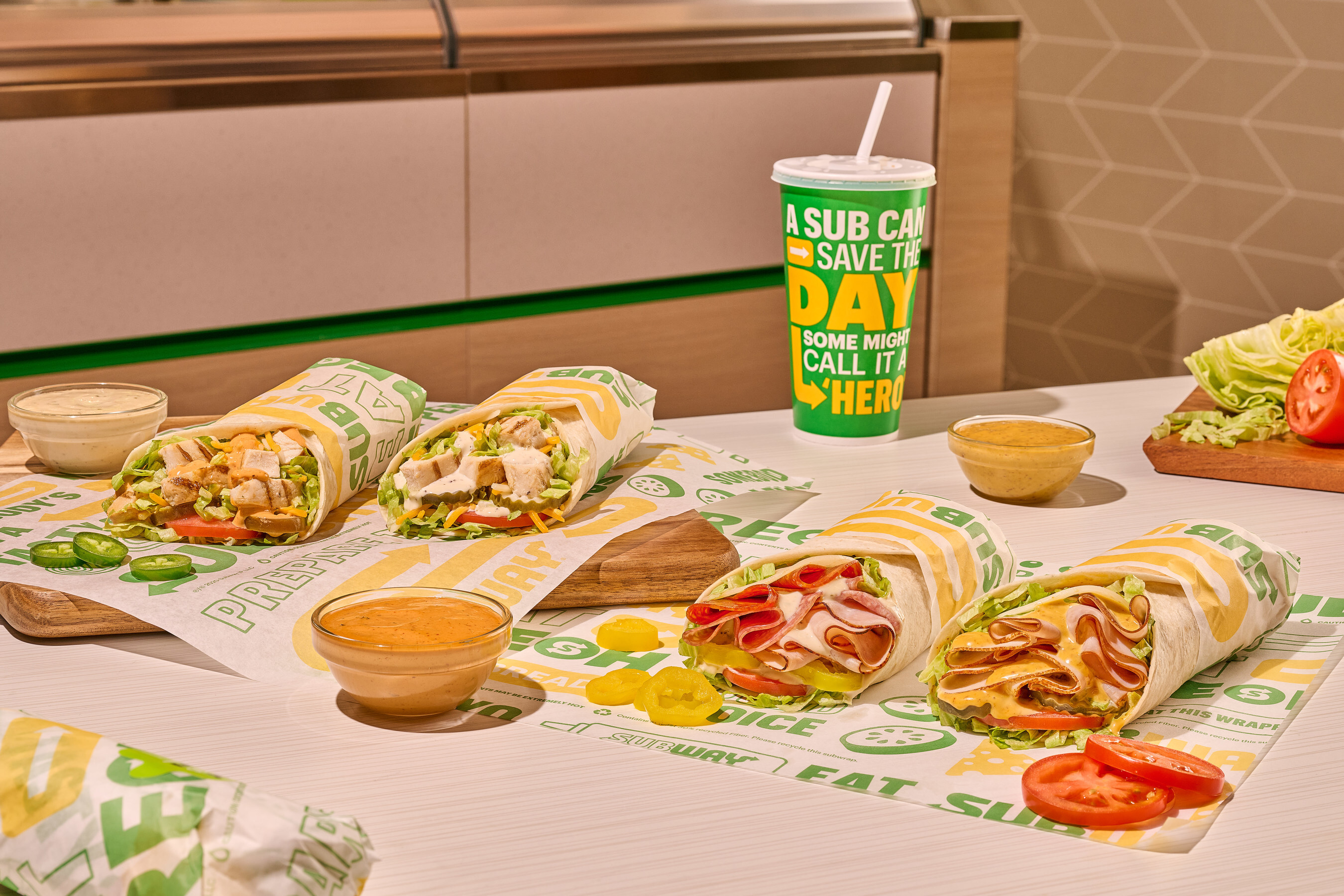
Subway has announced a major update to its US menu and value proposition for the start of 2026, introducing a new grab-and-go format alongside a revamped daily discount structure. comments debug Exchange Write a comment Write a comment Share Your Thoughts Be the first to write a comment. Featured in this news Foodservice Subway The Newsroom Never Miss an Update! Receive personalised weekly email newsletters with industry news curated just for you. Email* Submit or create an account to access more > Subway has announced a major update to its US menu and value proposition for the start of 2026, introducing a new grab-and-go format alongside a revamped daily discount structure. Starting 8 January , the chain is rolling out Protein Pockets , a soft tortilla-based option designed to offer high protein density at a competitive entry price of $3.99 . Simultaneously, the brand is reintroducing a structured value tier with a new $4.99 "Sub of the Day" lineup. Product Innovation: Protein Pockets The launch of Protein Pockets targets the "protein-conscious" and mobile consumer. The product features a toasty wheat-flavoured soft tortilla filled with curated proteins and vegetables. Key Selling Proposition: Price: $3.99. Nutrition: Over 20g of protein per serving. Target Audience: Grab-and-go consumers seeking non-fried protein options. The Debut Lineup: 🍗🔥 Baja Chicken: Grilled chicken, Monterey cheddar, smoky Baja Chipotle sauce, lettuce, Roma tomatoes, and jalapeños. 🍗🥗 Peppercorn Ranch Chicken: Grilled chicken, Monterey cheddar, zesty Peppercorn Ranch, lettuce, Roma tomatoes, and pickles. 🥩 Italian Trio: Black Forest ham, aged pepperoni, Genoa salami, Monterey cheddar, lettuce, Roma tomatoes, and mayo. 🦃🐖 Turkey & Ham: Oven-roasted turkey, Black Forest ham, Monterey cheddar, lettuce, Roma tomatoes, and mayo. Value Strategy: Sub of the Day To address price sensitivity in the QSR market, Subway is formalising a daily value calendar. Guests can purchase a specific six-inch sub for $4.99 , with an upsell option to add a drink and chips/cookies for an additional $2. The Rotating Schedule: Monday: Meatball Marinara Tuesday: Classic Tuna Wednesday: Sweet Onion Chicken Teriyaki® Thursday: Oven-Roasted Turkey Friday: Black Forest Ham Saturday: Italian B.M.T.® Sunday: Spicy Italian Dave Skena , Chief Marketing Officer, North America, emphasised the strategic focus on affordable nutrition: "Getting more protein in their diet is important to so many people. But all too often that protein is expensive or fried. With Subway's new Protein Pockets, they can get over 20 grams of protein for $3.99 without sacrificing taste. And with our new Sub of the Day lineup... folks can eat freshly made, delicious food at a great value every time they come to Subway." Loyalty Integration The launch is supported by the recently updated Sub Club loyalty program (launched in December), which offers a "buy three footlongs, get the fourth free" mechanic, further layering value for high-frequency customers. Subway US Launches 'Protein Pockets' and Revamps Value Menu with $4.99 'Sub of the Day' January 7, 2026 Foodservice Coca-Cola and KFC Announce US Beverage Partnership Foodservice Taco Bell Expands Live Más Café with Horchata Lineup and New Sites New Products Wingstop Launches Sour Patch Kids Flavoured Wings Business & Finance Starbucks Explores Takeover of Chipotle New Products Foodservice Bakery Health & Nutrition Related news
- Beyond Meat fined $38.9m for infringing Vegadelphia trademark | FNBX
Beyond Meat has been ordered to pay $38.9 million in damages to fellow alt-meat producer Vegadelphia Foods, after a federal jury found the company liable for trademark infringement. comments debug Exchange Write a comment Write a comment Share Your Thoughts Be the first to write a comment. Featured in this news Plant-based Beyond Meat The Newsroom Never Miss an Update! Receive personalised weekly email newsletters with industry news curated just for you. Email* Submit or create an account to access more > Beyond Meat has been ordered to pay $38.9 million in damages to fellow alt-meat producer Vegadelphia Foods, after a federal jury found the company liable for trademark infringement. The dispute centres on Beyond Meat’s use of the slogan “Great Taste, Plant Based” in an advertising campaign promoting its plant-based breakfast sausage sandwich in partnership with Dunkin’. Vegadelphia alleged that the slogan infringed on its own registered trademark, “Where Great Taste Is Plant-Based”, which it has used for years across its plant-based meat portfolio. Vegadelphia, founded in 2004 and based in Philadelphia, produces a range of plant-based beef, chicken and seafood alternatives. The company claimed Beyond Meat’s campaign caused “willful infringement” and derailed a planned expansion with two major industry partners, arguing that Beyond’s extensive marketing created an “overwhelming deluge” that overshadowed Vegadelphia’s presence in the market. A jury in the US District Court for the District of Massachusetts ruled that Beyond Meat’s slogan was too similar to Vegadelphia’s trademark and was likely to confuse consumers. A Beyond Meat spokesperson said the company was “disappointed” with the verdict and plans to seek judicial review. The ruling highlights the growing intensity of trademark disputes in the plant-based sector. Earlier this year, Impossible Foods lost a four-year EU case against Spain’s Impossible Bakers, after attempting to block the bakery’s use of the word “Impossible” in its branding. Beyond Meat fined $38.9m for infringing Vegadelphia trademark November 29, 2025 Plant-based Impossible Foods Launches Four Frozen Lines in Tesco UK Stores New Products La Vie Launches Meat Alternative Flavoured Tofu Range Plant-based Schouten Europe Unveils Plant-Based Fillet Using Proprietary Fibre Technology Plant-based La Vie Debuts 'UK-First' Plant-Based Salami Sticks at Waitrose and Ocado for Veganuary Plant-based Business & Finance Legal Related news