

Trend
Beyond the Buzz: Redefining 'Functional' Beverage Market
This report provides an exhaustive analysis of the three primary vectors driving this industry metamorphosis: Functional Nootropics, Next-Generation Protein, and THC/Non-Alcoholic Social Tonics. Through a detailed examination of market leaders and disruptors—including Laird Superfood, Beyond Meat, Twinings, Whirlwined, and Skip—we illuminate the strategic pathways defining success in 2026.
January 22, 2026
Bring The Insight to Life with This Product

Vitclear
Functional Nootropic Drinks
A variety of lightly sparkling low-sugar functional sodas, made with a delicious blend of botanical extracts found in nature. Scientifically formulated to support your brain, gut, and active health. Experience the benefits of nootropics, without harmful preservatives or artificial sweeteners, and support your body with appropriate amounts of vitamins and minerals in an easy-to-consume solution.

Never Miss an Update!
Receive personalised weekly email newsletters with industry news curated just for you.
The global beverage industry in 2026 stands at a transformative precipice, fundamentally reshaped by a convergence of technological innovation, shifting consumer values, and a radical redefinition of "wellness." The era of passive consumption—where beverages served merely to hydrate or provide a fleeting sugar rush—has effectively ended. In its place, we have entered the age of "Liquid Utility," a market paradigm where every liquid ounce is scrutinised for its functional contribution to the consumer’s physical, mental, and emotional optimisation.
Current market analysis suggests that the traditional distinctions between hydration, nutrition, and recreation have become increasingly blurred. Consumers no longer simply "drink"; they biohack. They seek beverages that serve as tools for cognitive sharpening, stress regulation, gut microbiome optimisation, and social lubrication without intoxication. This shift is driven by a sophisticated demographic that treats their beverage intake as a component of a broader health algorithm, heavily influenced by wearable data and personalised nutrition insights.
Key findings indicate that efficacy is the new currency of trust. The "fairy dusting" of functional ingredients is being rejected in favour of clinical dosages, as seen with Skip’s 2,000mg Lion’s Mane formulation. Simultaneously, the "California Sober" movement is forcing a premiumization of cannabis beverages, moving them from high-dose novelties to sophisticated, sessionable wine and seltzer alternatives like Whirlwined and Extract Labs' Sojourn. Furthermore, the protein sector is witnessing a bifurcated evolution: a pragmatic return to dairy for "complete" nutrition (Laird Superfood) alongside a push for ultra-clean, gum-free plant-based options (Ripple Foods).
As the global functional beverage market hurtles toward a projected valuation of over $300 billion by the mid-2030s, the winners will be those who can successfully navigate the "Processing Paradox"—delivering high-tech functionality while maintaining the clean-label integrity that consumers demand.
The Functional Revolution: Cognitive & Mental Health
The functional beverage sector has matured from a disparate collection of vitamin waters into a highly specialised market of "bio-hacking" tools. The most significant growth vector in 2026 is cognitive performance, driven by a workforce and student population desperate for focus without the jittery side effects of traditional stimulants.
Nootropics and the Rise of the "Brain Drink"
Nootropics—substances that improve cognitive function—have migrated from Silicon Valley tech circles to the shelves of mainstream discounters. The star ingredient of this revolution is Lion’s Mane mushroom (Hericium erinaceus).
Clinical Dosage as a Differentiator: The Case of Skip
The UK functional brand Skip has executed a market-defining strategy by launching a Lion’s Mane range that challenges the industry standard for dosage. In January 2026, Skip introduced a line of functional soft drinks exclusively at Home Bargains, a discount retailer, priced at just 99p per can.

Technical Differentiator: Unlike competitors that use "fairy dust" quantities (often 50-100mg) primarily for marketing claims, Skip’s formulation contains 2,000mg of organic Lion’s Mane extract per 250ml can. The brand claims this is eight to twenty times higher than competitor products.
Strategic Implication: This move democratises high-efficacy wellness. By placing a clinical-strength nootropic in a discount channel, Skip is stripping the elitism from functional beverages. It suggests a future where high functionality is a commodity expectation, not a premium luxury.
Formulation Details: The drinks are paired with Vitamin B6 and B12 to support nervous system function, creating a synergistic effect for cognitive support. The choice of flavours—Blood Orange and Cloudy Apple—signals a move toward sophisticated, adult palates even at a value price point.
The "Omnivore" Pivot: Laird Superfood’s Protein Coffee
Laird Superfood, co-founded by surfer Laird Hamilton and volleyball legend Gabby Reece, has historically been a bastion of plant-based nutrition. However, in January 2026, the brand broke tradition with the launch of Protein Coffee with Lion’s Mane, utilising whey protein.
The "Stacking" Strategy: This product exemplifies the trend of "ingredient stacking"—combining multiple functional categories into a single, convenient format.
Cognitive Support: The inclusion of Lion’s Mane targets the "morning fog," positioning the coffee not just as a wake-up stimulant but as a focus enhancer.
Metabolic Support: By adding 10g of protein (a blend of fast-absorbing whey and slow-digesting milk protein), the beverage mitigates the cortisol spike often associated with caffeine consumption on an empty stomach.
Omnivore Positioning: Gabby Reece’s endorsement of an "omnivore" approach reflects a broader consumer shift away from dogmatic veganism toward pragmatic nutrition. Consumers want what works for their physiology, and for many, complete animal proteins offer superior muscle synthesis support compared to plant sources.
The "Clean Energy" Movement: Redefining Stimulation
The backlash against "energy drinks" loaded with 300mg of synthetic caffeine and artificial sweeteners has birthed the "Clean Energy" category. These beverages focus on the quality of the energy—sustained, calm, and focused—rather than the intensity of the rush.

Josie Beverages and the "Zero Crash" Promise
Josie Beverages entered the U.S. market in early 2026 with a clear value proposition: "0 sugar, 0 calories, 0 crash".
Nootropic Blend: The formulation utilises a proprietary blend of Lion’s Mane (focus) and Cordyceps (physical stamina) alongside caffeine.
Mechanism of Action: The "no crash" claim is scientifically grounded in the exclusion of sugar (preventing the insulin spike-and-drop) and likely the inclusion of L-Theanine (though not explicitly detailed in every snippet, this is standard for "clean energy" stacks to smooth out caffeine’s vasoconstrictive effects).
Flavour Architecture: Flavours like Cucumber and Tangerine appeal to a sophisticated palate, distancing the brand from the neon-colored, "extreme sports" aesthetic of legacy energy brands. This product is for the boardroom, not the skate park.
Feature | Skip | Laird Superfood | Josie Beverages |
Primary Active | Lion's Mane (2000mg) | Lion's Mane + Whey Protein | Lion's Mane + Cordyceps |
Core Promise | Clinical Efficacy at Value Price | Complete Nutrition + Focus | "Clean" Energy (No Crash) |
Format | RTD Sparkling Soda | Powdered Coffee Additive | RTD Sparkling Energy |
Target Channel | Mass Discounter (Home Bargains) | Natural Grocery (Sprouts) / DTC | Speciality Retail / TikTok Shop |
Strategic Insight | Democratisation of bio-hacking | Hybridisation of rituals (Coffee + Protein) | Sophistication of the energy category |
The Gut-Brain Axis & Digestive Health
Digestive health has evolved from a niche concern about "bloating" to a central pillar of wellness, recognised for its connection to immunity, mood, and mental health (the Gut-Brain Axis). In 2026, the market has moved beyond simple probiotics (which suffer from stability issues in RTD formats) toward robust prebiotic fibres and mineral fortification.
The "Fibermaxxing" Trend
"Fibermaxxing"—the conscious effort to maximise fibre intake—has become a cultural phenomenon, driven partly by the digestive side effects of GLP-1 medications and partly by the growing awareness of the microbiome's role in overall health. This has created a fertile environment for beverages that deliver fibre in palatable, non-viscous formats.
Twinings Revive: The Functional Tea Evolution
Legacy tea brand Twinings has aggressively modernised its portfolio with the Sparkling Tea range. In January 2026, they launched "Revive," a Peach & Orange variant focused on the "mid-afternoon slump".
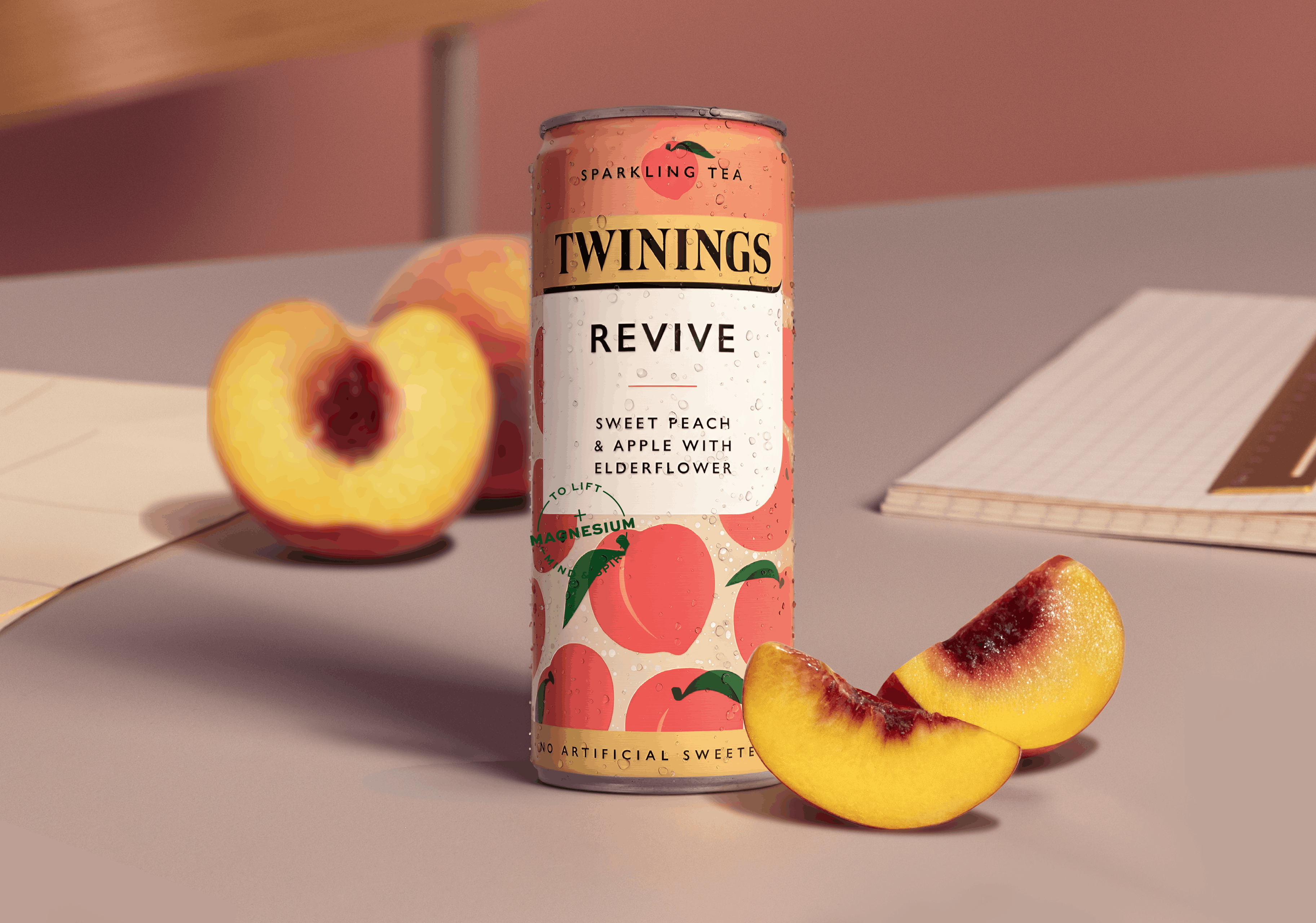
Formulation Breakdown:
Base: Chinese Green Tea, chosen for its subtle, grassy notes and natural antioxidant content.
Fortification: The drink is fortified with Magnesium, Vitamin C, and Niacin.
Magnesium: This is a critical addition. Magnesium is known as the "relaxation mineral," supporting muscle function and psychological well-being. Its inclusion targets the stress component of afternoon fatigue, not just the energy component.
Occasion Marketing: Twinings explicitly targets the "mid-afternoon pick-me-up". This puts them in direct competition with coffee and sugary snacks. By offering a < 50-calorie, no-added-sugar option, they provide a "guilt-free" transition from the high-focus morning to the winding-down evening.
Prebiotic Sodas
While Twinings focuses on tea, the broader market for prebiotic sodas (like Olipop and Poppi) continues to explode. These beverages use ingredients like tapioca fibre or chicory root to deliver 5-9g of fibre per can, mimicking the taste of traditional soda while servicing the microbiome. This category is projected to grow significantly as consumers swap out high-fructose corn syrup for functional fibre.
The Protein Pivot: Plant vs. Dairy 2.0
The protein beverage category is currently defined by a schism: a pragmatic return to dairy for "performance" consumers versus a purist push for "clean label" plant-based options for the wellness-focused.
The Return of Whey: Performance over Dogma
For the past decade, plant-based protein was the undisputed growth engine. However, 2026 data shows a resurgence of whey protein, which dominates the powder market with over 55% share. Consumers, particularly those focused on muscle hypertrophy and active ageing, are prioritising the complete amino acid profile and high bioavailability of whey.

Laird Superfood's Strategic Pivot: Laird Superfood’s launch of a whey-based product is a bellwether event. It signals that "wellness" is no longer synonymous with "vegan."
The Blend: The use of Whey Protein Concentrate (fast digesting) and Milk Protein Concentrate (slow digesting) is a sophisticated formulation choice derived from sports nutrition. It ensures immediate amino acid delivery for recovery, followed by a sustained release for satiety.
Clean Label Dairy: Laird attempts to apply "plant-based standards" to dairy—sourcing hormone-free, additive-free whey—thereby creating a "clean dairy" sub-category that appeals to health-conscious omnivores.
Plant-Based 2.0: The "Clean Label" Imperative
The plant-based sector is facing a reckoning regarding ultra-processed ingredients. Consumers are increasingly rejecting plant milks laden with gums (gellan, locust bean), oils (rapeseed, sunflower), and artificial stabilisers.
Ripple Foods' Organic Disruption: Ripple Foods responded to this demand in January 2026 with their Organic Plant-Based Milk.
The "Gum-Free" Promise: The formulation contains five ingredients or fewer and explicitly excludes gums and oils. This addresses the "seed oil" anxiety prevalent on social media wellness channels.
Nutritional Parity: With 8g of protein per serving (derived from yellow peas), Ripple matches the protein density of cow's milk. This is a critical differentiator against almond and oat milks, which typically offer 1g or less of protein. Ripple is positioning itself as the only viable nutritional alternative to dairy, rather than just a lifestyle alternative.
Hybrid Formats: Beyond Meat’s Beverage Debut
Beyond Meat, facing saturation in the meat alternative aisle, has diversified into beverages with "Beyond Immerse".
Sparkling Protein: This product defies traditional categorisation. It is not a milkshake; it is a clear, sparkling beverage delivering 10g-20g of protein.
Technical Achievement: Creating a clear, carbonated protein drink is technically difficult due to protein solubility and astringency. Beyond Meat’s use of pea protein isolate in this format represents a significant R&D investment.
Functional Stacking: The inclusion of 7g of tapioca fibre aligns with the "fibermaxxing" trend. It positions the drink as a complete "body fuel" system—supporting muscle (protein), gut (fibre), and hydration (electrolytes).
The THC & Alcohol Alternative Disruption
The cultural shift away from alcohol is perhaps the most disruptive trend in the beverage industry. The "California Sober" lifestyle—abstaining from alcohol in favour of cannabis—has transitioned from counter-culture to a commercially significant demographic.
The "Social Tonic": Replacing the Ritual
The challenge for non-alcoholic beverages has always been the loss of the "ritual" and the "buzz." 2026 has seen the rise of products that successfully replicate both.
The Cannabis Seltzer: Extract Labs' Sojourn
Extract Labs launched Sojourn, a THC seltzer line, to target the social drinking occasion.
The "Golden Ratio": Each can contains a 1:1 ratio of Delta-9 THC (10mg) to CBD (10mg). This is a crucial safety mechanism. CBD creates a "buffer," mitigating the anxiety or paranoia sometimes associated with THC. This makes the beverage accessible to "cann-curious" consumers who fear an overwhelming high.
Nano-Emulsification: The brand utilises nano-emulsification technology to ensure the cannabinoids are water-soluble. This allows for an onset time of 10-15 minutes, mimicking the pharmacokinetics of alcohol. This "fast onset, fast offset" profile is essential for social titration—allowing consumers to have a second drink without fearing a delayed, compounding effect.
Regulatory Loophole: By using hemp-derived Delta-9 THC (federally legal in the US if <0.3% by dry weight), Sojourn can be sold in standard retail environments and online, bypassing the restrictive adult-use dispensary system.
The Premiumisation of Cannabis: Whirlwined
A major gap in the market has been a sophisticated cannabis option for the dinner table. Whirlwined has filled this void with the industry's first THC-infused Sauvignon Blanc.

Process Authenticity: Whirlwined begins as a fully fermented, premium wine from the Columbia Valley. It is then dealcoholized to remove the ethanol before being infused with THC. This preserves the tannins, acidity, and complex aromatics of wine, which are essential for food pairing.
Caloric Advantage: At only 25 calories per serving (vs. ~120 for wine) and <1g of sugar, it appeals to weight-conscious consumers.
Distribution: Launching in mainstream liquor chains like Binny’s Beverage Depot signals the normalisation of cannabis beverages sitting directly alongside traditional wines.
Non-Alcoholic Beer: The Performance Positioning
Non-alcoholic (NA) beer continues to surge, driven by improved production methods that retain flavour.

Bero x Barry’s Bootcamp: Actor Tom Holland’s NA beer brand Bero partnered with Barry’s Bootcamp.
Rebranding "Beer": This partnership recontextualises beer from a "vice" to a "recovery drink." By selling BERO in gym lobbies, the brand highlights the isotonic properties of beer (carbs, electrolytes) while removing the alcohol.
Technical Quality: Bero uses a maltose-negative yeast strain. Unlike standard yeast, this strain ferments without producing significant alcohol, preserving the malt sugars for body and mouthfeel—solving the "watery" complaint common with early NA beers.
The financial trajectory of these sectors confirms their strategic importance.
Functional Beverage Market
Market Size: The global functional beverage market was valued at approximately $168 billion in 2025.
Growth Projection: It is projected to reach $314 billion by 2035, growing at a CAGR of roughly 6.44%. Other estimates are even more bullish, predicting a rise to $368 billion by 2032.
Key Drivers: An ageing population seeking longevity, the rise of preventive health behaviours, and the blurring of food/pharma lines.
Cannabis & THC Beverages
Growth Velocity: This is the fastest-growing segment. The global cannabis beverage market is expected to grow from $1.92 billion in 2026 to $7.60 billion by 2035, with a staggering CAGR of 16.5%. Some reports project even higher growth rates of up to 23.4%.
Drivers: Legalisation, the "California Sober" trend, and the availability of hemp-derived Delta-9 products in mainstream retail.
Market Segment | 2025/2026 Estimate ($Bn) | 2035 Projection ($Bn) | CAGR | Primary Driver |
Functional Bev | $168 - $180 | $314 - $368 | ~6.5% - 10% | Cognitive health, Gut-brain axis |
Cannabis Bev | $1.9 - $3.6 | $7.6 - $14.6 | ~15% - 23% | Alcohol replacement, Legalisation |
Functional Foods | $171 | $265 (2033) | ~5.6% | Nutrient density, Convenience |
The beverage industry of 2026 is no longer defined by flavour, but by function. The successful brands of this era—Skip, Whirlwined, Laird, Ripple—understand that they are not selling drinks; they are selling solutions. They sell focus in a can, relaxation in a bottle, and muscle repair in a coffee cup.
As the "Liquid Utility" trend accelerates, the market will belong to those who can master the delicate balance of high-tech efficacy and clean-label ethics. The consumer is ready to drink their way to a better self; the industry’s challenge is to brew the potion that delivers on that promise.